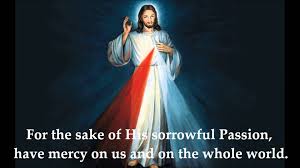
Christ’s Divine Mercy

As we virtually gather again, we continue to ask for God’s Mercy during this crisis. Today is the Second Sunday of Easter, which 20 years ago Saint John Paul II officially designated this as Divine Mercy Sunday. He also canonized St. Faustina, whose diary provided the information on this beautiful celebration.

We call on God’s Mercy because, as St. Peter reminds us, “Blessed be the God and Father of our Lord Jesus Christ, who in his great mercy gave us a new birth to a living hope through the resurrection of Jesus Christ from the dead.” Last week we celebrated the resurrection on Easter Sunday, this week commemorate the Mercy which God showed all of us in sending his Son to take away our sins.
God’s Mercy is evident throughout history and shown through the bible. God was merciful to the Israelite people on their Exodus from Egypt even though they questioned his every move and, even at one point, decided it was a good idea to worship a golden calf. Through Christ and the covenant that God entered into with us, he has shown his Mercy again.
God understands that as men and women, regardless of our knowledge of Christ, we will still sin, which is why Christ reminds his disciples that they are the ones to forgive sins here on earth. Christ accomplishes forgiveness of sin through the Holy Spirit and our priests during the sacrament of reconciliation.
This reconciliation is also borne out in the Divine Mercy image as we are renewed in Spirit through baptism by water. We are cleansed by the blood he shed through the sacrament of reconciliation. This Divine Mercy is not something that can be attained by good works, or merely living life in a way that WE believe is good. This Mercy is given freely to those who approach the fount of Mercy humble of heart and a hole waiting to be filled by the Spirit.
In order to accomplish this, we need to be able to put aside all of our proclivities for sin. This means we become closer to Christ. We do this with the help of this Divine Mercy as we grow closer and closer to Christ. This should not just happen as we approach the end of our earthly life; it should begin the moment we were baptized. We continue to grow closer to Christ as we receive His body, blood, soul, and divinity in the Eucharist. Finally, we are sealed with the Holy Spirit in the sacrament of confirmation, this would allow us to continue to grow stronger in our faith, and our relationship with Christ as the Holy Spirit should dwell within us.
Our downfall comes when we leave the church and enter into the world. The world around us does not currently value faith in Christ the way it should. The values tend to reside in science and personal decision making. We believe that what we think is right and feels good is good for us. We do need to remember, though, that we are witnesses to God’s Divine Mercy every day.
We see this Mercy in the care that is given to patients by our health care workers, especially during this time of crisis. We see it in the compassion shown by our parish family as we come together to make sure our food pantry has everything they need to assist those with food and grocery needs. Not only during this time but also regularly when we are not in quarantine. We see it in the continued support of the parish during this trying time.
Someplace where it happens that is not as widely recognized is the handling of funeral services for families who have lost loved ones. Fr. Tom, the staff, and a dedicated group of volunteers help the family feel the love, compassion and care these folks have for them and their deceased loved one.
While we are certainly going through a trying time right now, we can see all around us images of God’s Mercy for all of us. While we may sometimes slip into ways that are not in line with Christ’s teaching, we can recover and through the grace bestowed upon each of us to come back to God.
We should be utilizing this time to help us see all the areas of our lives where God has shown us his Mercy and Love. Sr. Faustina had the good fortune through her devotion to have a profound relationship with Christ so that he could remind her of His unending Mercy. In doing so, he called on her to make it known to the world that he was waiting to be able to show this Mercy to those who were open and ready for it.
The Mercy that Christ shows to the disciples as he joins them after the resurrection by merely saying, “Peace be with you. As the Father has sent me, so I send you.” With this act, he is showing us that we are all called not only to receive the Divine Mercy, which God so freely gives. We are also invited to go forth and show this Mercy to others.
Christ showed this to a group of people who abandoned him during the lowest time in his human life, the time of his trial and crucifixion. These people were with him from the beginning learning from him how to live, yet they let the world shape their reaction to the arrest of Christ. With the receipt of the Holy Spirit and the strength provided by Christ’s Mercy, these folks went forward and built the faith which we profess today.
I am sure that each of us can look back on our lives and see examples of where this Mercy saved us from going down a path of destruction. Since we have all received this Mercy, we are expected to show this to others who may wrong us. We can recall this example from the Gospel of Matthew with the servant who had his debt forgiven. “His master summoned him and said to him, ‘You wicked servant! I forgave you your entire debt because you begged me to. Should you not have had pity on your fellow servant, as I had pity on you?’”
All of the graces and Mercy which Christ has given to us are meant to be shared, so as we continue during this unusual time of the pandemic, let us all remember that while Christ wants to shower us in His Mercy generously. We are also called to show that same Mercy to those around us freely. When we fail, and we will fail, Christ will be there to extend his Mercy on us again if we willingly and humbly ask for it

Is There Hope in the Darkness

Homily from Good Friday 2020


We call this Good Friday, but this name seems counter-intuitive. We are here discussing the day of the Passion and death of Jesus. We read from the Passion, and at the same time, we celebrate this horrific moment. This reality is even more pronounced as we cannot gather together in one place as a community to venerate the cross. Yet there is hope in the cross. In the beautiful Passion narrative, we hear from John, and we know that he is not going to lose anyone that believes in Him.

So he again asked them,
“Whom are you looking for?”
They said, “Jesus the Nazorean.”
Jesus answered,
“I told you that I AM.
So if you are looking for me, let these men go.”
This was to fulfill what he had said,
“I have not lost any of those you gave me.”

Those of you in your homes are there so that we do not get anyone else sick, thereby saving lives. Christ saved lives with that statement in the garden. It was foretold of Jesus by the prophets, but we can relate to this statement in a new way during this crisis. We are scattered throughout the area, just as the disciples scattered from the garden that night.
While we here will venerate the cross that is processed in, we will ask all of you watching at home to venerate the cross or crucifix which you have chosen in your home. This action will allow our community to come together, though scattered, is a sign of hope and faith in the cross.
We have an advantage over the apostles during this day and age. We know how the story ends; the apostles had forgotten what Jesus had told them. The scattered apostles eventually all came back together in the upper room, just as we will gather again in the church to worship Christ.
With the Passion we hear of the suffering that Christ endured for our sake. Yet when it comes to the Eucharist, we will again celebrate this suffering in our acclamation. Save us, Savior of the world, for by your Cross and Resurrection you have set us free.
We are quarantined in our homes, and like the apostles, we may feel isolation and fear due to this quarantine. We are reminded again of the Passion that Christ, even thru his suffering, will make sure that he cares for us. During the midst of his worst pain, he made sure that he took care of his mother and the apostles by tying them together to care for one another. The apostles were responsible for ensuring Mary’s well-being and Mary acting as a mother to us all.
Christ knew this was his fate, but he also knew that in submitting to His crucifixion without a fight that he was doing this for his friends, the apostles, and for us today. Christ died for our sins on this Good Friday. We know that while he dies today in three days, on Easter Sunday, he will rise again, thereby defeating even death.
We are currently sitting in our upper room, waiting for the cure, the apostles sat in their upper room, waiting for Christ to remind them of what he said. Christ accepted His Cross for us even though he knew we are sinners, all the while still spreading the message of peace, compassion, and love. He did this right up until his death. The apostles came together again out of fear, but also out of hope. The hope that all that Jesus had taught and told them would come to pass.
During this time of stress, while we sit in our upper room, fearing what may happen if we venture out, we should be bringing Christ into our homes, for the closer we are to Christ, the more he will strengthen us. This hope in Christ can help us to allay our doubts and fears. We can be more compassionate to those we are spending more time with than usual.
When we look at this crisis through the lens of the cross, we see that our current suffering is nothing compared to what Christ suffered. We know why he suffered on the cross to redeem us and save us from the power of death. We know that eventually, we will all pass from this life, and for those who believe and follow Christ teaching, there is the promise of eternal life with Him.
We, like the apostles, though, have a strength given to us by knowing Christ. We know that after Good Friday comes, Easter and Christ rose from the dead. There will be an end to the coronavirus pandemic even though listening to the news. It may not seem that way. Through Christ and his friendship, the apostles overcame their fear that came from the belief the same fate awaited those who followed Him. Yet they still believed in his friendship and his teachings enough to come together after his crucifixion to support one another. We do the same, even though it is a virtual gathering, to help support one another and look to Christ to assist us.
Through this, we are reminded that eternal hope comes from His Cross. Christ will not forsake us, even though we may be scattered and alone. He will come to us and help us to overcome this crisis so that we can freely gather again as a community in one place. This is the hope we carry through this unusual time in our lives. May the peace and hope seen in Christ crucified be upon all of those gathered here and all those in their homes around the world.

Be Not Afraid

What are we to do during this time of confusion and fear. The numbers seem to go up every day, with the never-ending death toll also rising. We see this and become afraid for ourselves, our families, and those who we consider friends. This fear is born from the news we hear, yet it is not what God wants us to do.
One of the most used phrases in varying ways is “Do Not Be Afraid.” We have this to lean on during times of trouble and suffering. We are all suffering in one form or another. Those who are home, possibly with children, are beginning to become stir crazy and are wondering if all this is worth the pain and suffering it is causing.
If we consider a people of God, then fear should not be part of what we are feeling at this time. We need to go ahead and follow the directives of our federal and local governments in how we interact and congregate, but this does not mean we should be fearful of the outcome. During this time of suffering, we can become the men and women that Jesus calls us to be if we claim to be Christians.
If we choose to believe in Christ and truly let him live within our hearts, there is absolutely no reason for fear. We would become beacons of hope in the world by the joy and the serenity which we profess and express to others. Christ died on the cross, yes he did, but three days later he rose again.
We hear it said in scripture that all those who proclaim his name would receive salvation. The biggest question we have to answer is, do we genuinely believe that he is with us, or do we only say the words to those we want to impress or get off our back.
There are plenty of Christians who say, I believe in Christ, but do not have him dwelling within them. These are some of the ones saying we should ignore directives of the government and get together as always for Mass or Sunday services. Some of them believe that the government is just trying to limit our religious freedom in this country. Some believe that if they are worshiping God, they will not contract the disease. The question remains, are we willing to put others at risk simply to make sure we celebrate the way our religion calls us to do?
We undoubtedly need God in our lives during this time of distress to help guide us through the storm. The thing is we should be able to have God in our lives without attending religious services for a short period. We can bring him into our lives in any number of ways without risking our family and friends around us.
We can look at the scriptures to bring him closer to us. We can watch the Mass on Sundays, most likely from our parish, and listen to the homily on the readings, learning what our faith teaches. We can make an act of Spiritual Communion since we cannot currently receive the Eucharist.
We can read religious books that are available to learn again more about God and what our faith teaches in how to allow Him into our hearts to follow Him and His commandments. We can do all these things and learn more about God and Christ and make sure that we bring Him into our hearts as well as our minds. When we do this, we will no longer fear what is going on in our world, as the ultimate goal for every Christian is to gain eternal life with Christ. So be joyful and not fearful as we let Christ shine his light through us to light the darkness ahead.

Where does our Hope come from

When I was in school, both high school and college, there were times I was in class and the teacher was talking about the lesson. Of course all I heard was bwaa bwaa bwaa. I didn’t understand what was being taught. I was struggling and I was worried about the next test that was coming up soon. How would I ever climb this mountain of understanding in order to pass the test. Then more times than not before the test, it hit me, usually while I was doing something else, the light bulb went on and the instructions became clear. I began to hope that this would happen more and more as I got older. I also began to realize it was ok to ask for help when I did not understand something.
God does something similar for Peter, James and John in the Gospel today. Jesus and these three apostles go up the mountain. I have read this is about a 2000 ft vertical climb that is very difficult. When they get to the top they are exhausted. As they caught their breath and looked at Jesus there was this otherworldly glow about him, he was transfigured into the divine in front of them. For the first time showing them that he was the Son of God, the Messiah.
They see Moses and Elijah, representing the prophets and the law. When they see them conversing with one another Peter is the first to say, lets stay here, we will build tents for each of you so you can relax and we can stay in this perfect presence. In this presence there is no bad that can happen, and I would guess Peter and the others wanted to stay there forever.
Then the voice of God tells them who Jesus really is, the Son of God, with whom he is well pleased. They are so struck by this voice that they prostrate themselves and when Jesus tells them to get up there is no one but the four of them on the mountaintop. This passage shows the hope which Christ brings to each of us.
We are reminded of Abram today who was asked to leave all he knew and loved to take his family to a distant land. All that was promised was that God would bless him and make his name great and a blessing. We also remember from the same book of Genesis that God promised Abram descendants even though he and his wife were well beyond the child bearing years. Abram believed and did as the Lord asked him. He became Abraham who the Lord made the first covenant with.
We then hear from Paul’s letter to Timothy that he is to bear his share of hardship for the Lord. He is reminded that he will do this with the strength of God supporting him. He is called to follow Christ’s teaching in order to fulfill his life. Life is not meant to be about his works but about following Christ in order to gain eternal life with him.
The apostles were being prepared for the day when Christ would not be there, as they got to see the Divine Christ on the mountaintop. Timothy and Abram were called to believe in something they could not see. We are called to be like Timothy and Abram.
This is never something which we are called to do alone, as with all the examples of the readings today God is with them as they follow along his path. The apostles were not perfect in this as the only one of the three who saw Christ transfigured, John, made it to the cross to watch Christ crucified. In doing this he witnessed, along with the others that were there, the cross that he carried all along in order to redeem us from our sins.
He forgave the apostles for abandoning him and still formed his church through them. The one thing that all three readings today remind is of the hope we are to have in Christ. This hope is what can get us through bad times and allow us to see the mercy of God in our lives. It also allows us to see God in our daily interactions and trials.
We will all struggle at times with any number of different things over the years, a difficult sibling or coworker, the loss of a job, the loss of a loved one. How do you get through these difficulties. It is usually from the hope that we have for a better tomorrow. When we have hope we have an easier time dealing with the hard times. We may even see God in the interactions we have during these tough times. We are currently in a stressful time as a nation, we have the seemingly never ending political antagonism, the coronavirus, and many other associated problems that go on around us. We do see the face of God though during these tough times, we see it in the new baby that was born or the wedding we attend or are a part of.
There is a book written by Victor Frankl called “Man’s search for Meaning”. It is a very powerful book and a wonderful reminder of how strong this hope we are called to have can be. Mr. Frankl was a resident of Auschwitz and other concentration camps during World War 2. He became a psychiatrist after the war and wrote this book that relates what he found when he searched for a reason to continue to live during his time in the concentration camps.
What he found from those around him who were there, and it eventually infected him, was that the people who survived the longest, regardless of the trials they were put through, had an unending source of hope in God. This hope allowed him to survive for 5 years in those camps. It also allowed him to see in his practice as a psychiatrist, that those who were the most likely to survive the psychological pain they were going through had this same unassailable hope.
This hope for many comes through Christ. During this Lenten season as we place ourselves more firmly in His presence we need to rekindle in ourselves this sense of hope. We can accomplish this by reading from scripture and attending Mass. We also should take advantage of the sacrament of reconciliation which is offered more often in the form of reconciliation services in the area.
Doing these things will not guarantee a life that is free from hardships, but usually just the opposite. We will still endure hardships, but through those hardships we will be called ever closer to Christ. The goal is to make him so much a part of our life, that we live as he would like us to and to show those around us how to do this. There will still be things in the culture that go against our beliefs, but with the hope in Christ and the everlasting life with him we are called to, we can get past those as well. It may appear at times like the evil in society is winning, but that is what Satan would like you to think. If we have hope and follow Christ’s teaching through scripture and the church we will be on the winning side in the end. You just need to remember one thing that I was told a long time ago. Being a Christian is not for wimps.

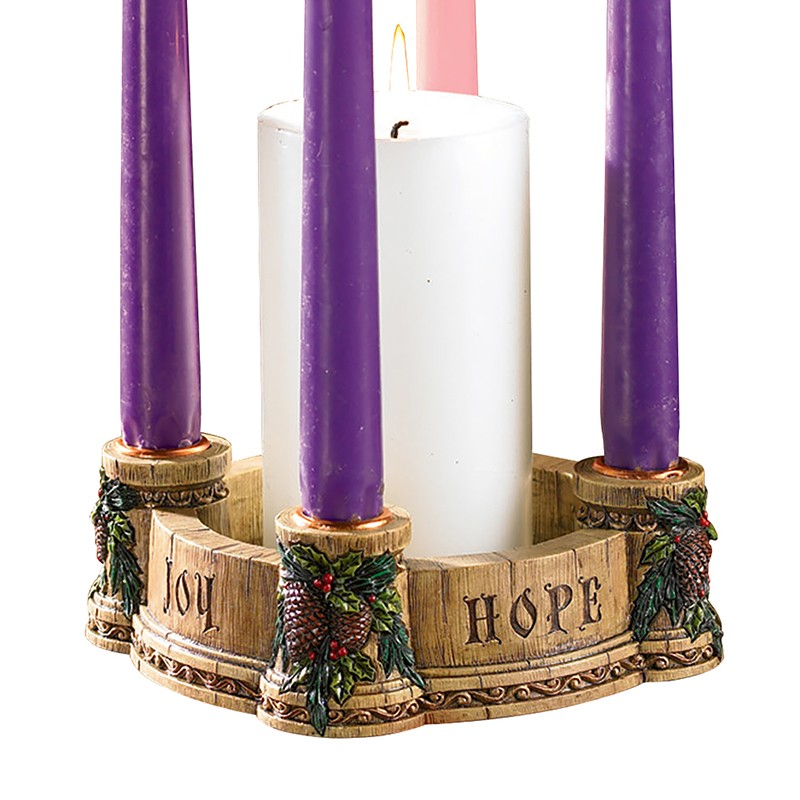
Lets us Begin Advent

Welcome to Advent and the beginning of a new liturgical year in the church. What is Advent and why is it the beginning of our liturgical year? Advent is a time of preparation as we await the coming of the Lord. It is a time for us to renew in our hearts the faith that we profess each week during the creed. During a long year we all have trials that pull us away from our faith. Advent is a time to come back to that faith in a new and more energetic way.
We saw this past week our national feast of Thanksgiving where we come together as family and friends to give thanks for the blessings which we have been given during the last year. Then of course our consumer culture takes over and we are told the Christmas season has begun, it used to wait until Friday but now it all begins by Thursday afternoon. Some people may not even clean up from the Thanksgiving feast before the retail season begins.
If you notice at the end of the parade Santa Claus comes down to herald in a new season, for the retail industry that season is Christmas. For the Christian world that season should be Advent. This season of preparation is for the coming of our Lord, one of the most Holy days of the Year. This preparation should include prayer, penance and reconciliation. This will help us become more in tune with what Christ asks of us.
You would think that it should be a joyous season not only in our lives, but in the readings as well. Then why are the readings today talking about the end of times? The first two weeks of Advent continue the apocalyptic theme we have been listening to over the last few weeks. It is so while we want to prepare the celebration of the first coming of our Lord, we should also be preparing in our hearts and minds for the second coming of our Lord. We need as Jesus reminds his disciples to be vigilant in our faith. “So too, you also must be prepared, for at an hour you do not expect, the Son of Man will come.”
This is a time as is Lent for us to show repentance and reconciliation with our faith and with our church. This is because as Christians Saint Paul reminds us the we are children of the light not the darkness. We get to see the darkness all around us in our daily lives. We could see some of this happening soon after we were all giving thanks for our blessings as we do every year. People getting mad that the deal they wanted is no longer available or they got there too late and there are no more of what they were looking for in stock. Since in our consumeristic culture “Black Friday” has now extended to a whole month we are less likely to see the stampedes from the past when stores open their doors for the shopping season to begin.
In our culture today we all can fall into the trap of wanting the latest and greatest thing that has come about. In reality what we need to see more around us is what is actually being portrayed at Christmas. As we begin to work our way through Advent let us remember that the reason for the season is actually two fold. The first being we need to be vigilant and prepared for the second coming of the Lord, for as Isaiah reminds us when this happens nations will no longer be fighting nations because the Lord will be coming to judge the nations.
Are we ready to be judged by our Lord or are we too busy judging others? This is a problem I suffer from on more than occasional day. I tend to drive a lot during my work week and in doing so I get very judgmental about those around me on the road. It is usually not a pleasant judgment I am handing out either. Karen reminds me on occasion that I don’t know what is going on in their lives that may be causing them to behave in that manner, so I should give them a break. This is true in all instances, whether it is while we are behind the wheel or in any interaction we have with others.
This way of preparing is not something which will help us look toward the second coming. We need to be prepared as Saint Paul reminds us; “Let us then throw off the works of darkness and put on the armor of light; let us conduct ourselves properly as in the day, not in rivalry and jealousy.” We are reminded throughout this season by our society that it is good to be nice to others. While this is certainly true at this time of year, it is not restricted to just from Thanksgiving to Christmas. It is for the entire year, day after day. There are many here who practice this throughout the year, but we will all be tested at times based on how someone may interact with us.
Being prepared to handle these situations all the time takes not only practice, but also a belief in something that is bigger than us. We as Christians believe this is eternal life with Christ that we should all be striving for. While there is nothing we have done or can do to earn this eternal life, there is plenty that we can do to separate ourselves from eternal life.
So, as we begin Advent let us spend time in prayer to help us prepare to be vigilant and to be children of the light. The nice thing about being prepared in this way allows us to not only help keep us from straying too far away for the path Christ wants us to walk, it also generally allows us to be more joy filled throughout the day and the year. This joy can be contagious which will allow us to bring people back to the faith which Christ is asking us to do.

Following our Vocation

Homily for the Third Sunday of Easter 2019

Readings: ACTS 5:27-32, 40B-41:REV 5:11-14 :JN 21:1-19 

There are many things that call to mind my spiritual path throughout the readings for today. When I was first approached about pursuing the diaconate my reaction was one of shock and horror. There was no way I was ever going to be a deacon. I actually found it funny that I was asked about being a deacon.

With that funny thought in mind, I told my wife thinking she would find it just as funny. When I finished instead of laughing there was a brief period of silence then she asked what my response was. When I told her of course it was no, she sounded disappointed as she said, “that’s too bad, I think you would make a good one.”

For me this was a foreign concept as I was blinded, kind of like the disciples were when they first saw Jesus on the shore and did not recognize him. There were many reasons that I did not feel it was a calling for me, one of the main reasons was and still is how comfortable I am speaking in front of large groups of people.

Imagine you are a guy who through their late teens and twenties only darkened the doors of a church when it was absolutely necessary. Even weddings were avoided, I would only go to the church if I was part of the wedding party. The only mandatory time was for funerals. This led to many things going on in my life which were not in my best interest, though I could not believe it at the time.

There were times when I would turn my back on my family and my friends, which in hindsight was not the wisest thing to do during those times. Looking back, I should have turned toward them rather than away from them. The reasons were usually due to a worry that I would be judged by my family or friends. I had already prejudged myself and knew that those who knew me best would judge me harshly. It turns out that while there was talk about the mistakes that were made, there was never a judgement made about me. Learn from your mistakes and move forward and do your best not to make the same mistakes again.

When I finally began going back to church, thanks to Karen, I realized that the Lord we are called to love, loves us back unconditionally. While there may be a discussion about the mistake, He is there in all his mercy to forgive us and help us to move forward along the path He has chosen for us.

The disciples realize this in a stunning way when they are before the Sanhedrin and are then released. Of course, they were asked to stop talking about Jesus, but this only made their faith in Him stronger. They realized that they were being persecuted in Christ’s name. This brought to life for them one of the Beatitudes.

Blessed are you when they insult you and persecute you and utter every kind of evil against you [falsely] because of me. Rejoice and be glad, for your reward will be great in heaven. Thus they persecuted the prophets who were before you.”

The disciples realized the more they followed Jesus the more likely their eternal reward would be great as he had promised.

When the disciples saw that Jesus had died on the cross, but before Pentecost, they were really unsure of what they should do. Peter decides to go back to what he knew from the family business. He was going to go fishing. He knew it was a place he could think quietly about what he had experienced in the three years he had followed and believed what Jesus taught. Though he did not recognize Jesus initially, he still had the feeling that her should listen to this stranger on the shore. This resulted in a catch that was unimaginable a few minutes earlier.

When I finally came back to the church and I was again receiving the body and blood of Christ on a regular basis I also realized I should begin to listen to what was being preached and taught through the homilies and the readings.

For me the oddest thing happened after Karen did not find my invitation to be a deacon as funny as I did, I realized in my thoughts and in my prayers, that there had been a voice calling me all along to do my best to live a life closer in line with what Jesus was teaching. I had always found it easier before that to simply ignore that little voice, or I would drown it out with other things. How many times have all of us here had the same feelings?

When Peter finally realized that it was Jesus on the shore, he could not wait for the boat to arrive on shore, he had to jump in the water and run to it. This is what we are all called to do, in times of trouble, joy, sorrow and temptation, run to the Lord, he will help guide us along the path.

Peter I am sure did not feel worthy of what Christ was asking of him, but he realized in the end it was better to listen to Him and follow, than to go a different path. He grew to become the Rock on which our church is built.

Many theologians call the three-fold questioning which Jesus does to Peter that morning forgiveness for the three times Peter had denied knowing Jesus during his trials. This course correction which Jesus does by simply asking Peter if he loves Him, allows Peter to understand and know that in the end he will be persecuted and put to death in a brutal way for simply following what Christ taught him.

He followed him not because he was looking forward to the brutal death, but because he realized in his interactions with him that Christ was the way to eternal salvation. We are all called in our own way to follow Christ for the same reasons. Just as he did with the disciples, he has given us a path to follow and some ways to get there. He wants us to follow him, while we may never end up having to deal with what the disciples did, we will be questioned for our faith in Him.

He has sent the Holy Spirit and the Eucharist to help guide us. The Holy Spirit is whispering his instructions to us, and there are times when these instructions are hard to follow. We then have the Eucharist, His Body and Blood, to feed us and give us the strength to follow His guidance. We are all called to live out our vocations in a tangible way. In order to understand those vocations, we need to take the time to listen to the Spirit. No matter how funny or horrifying it may sound to you at the time if it is truly a calling from the Spirit we can and will persevere through the trials and tribulations that may come with the vocation.

Let us all take the time to find a quiet place in our busy lives so that we can listen for where the Spirit is calling us. Then make sure that we partake in the Eucharist on a regular basis to make sure we have the strength to follow the path we are being called to follow.

Do we show True Love

Readings;  JER 1:4-5, 17-19, 1 COR 12:31—13:13, LK 4:21-30

Homily for the 4th Sunday in Ordinary Time Year C

In today’s world we see so many different groups. These groups can be divided by political, economic, racial, gender, religion, school or any number of other groups. What we see today is a large divide amongst some members of these individual groups. Some believe they are superior for whatever reason to the other.

In doing this they begin to believe only what is spoken to them by those who are likeminded individuals. Those who disagree with them are simply wrong or foolish regardless of what they say. As we see this has worked out so well in the workings of our government.

Jesus runs across a group in Nazareth with a similar outlook. Initially when they listen to him, they like what he has to say since it agrees with the narrative they believe. When he begins to tell them the Elijah and Elisha ended up having to prophesy to those outside their circle to be believed their tone takes a turn for the worse. So much so they want to send him to his death right then and there.

Jesus is reminding us that no matter our outlook on life we need to be open to the perspective of others in order to help them. These outside perspectives may not agree with our motivations or ideas, but that does not make them invalid. Everyone has a purpose and is loved by the same God we profess. We are all trying to gain salvation by living our lives the best way we can.

Jeremiah reminds us that each of us is special to God, remember; “Before I formed you in the womb, I knew you, before you were born, I dedicated you,” These words remind us that God cares for each one of us as we go out into the world. We are special and we are called to show love.

To do this we need to prepare ourselves for the spiritual battle of daily life. We see it all around us, a world that seems more interested in their phones than in having a conversation with the people sitting at their table. We used to laugh at our children as they sat across from each other and texted each other rather than talking to each other. As adults some of us now fall into that scenario.

I had a friend that told me a story about a dinner he and his wife went out for. During dinner there was a family of 10. There were three adults and seven children ranging in age from around 6 to 14. As one would think they were expecting it to be a loud and boisterous table. Imagine their surprise when the only words spoken were to the waiter as they ordered and received their food. The rest of the time, including while they were eating, they were engrossed in whatever was on their phones.

Doing this, and I can say most of us are guilty of this at one time or another, just allows us to keep to our little silos and with our groups of like-minded friends. We never learn the perspective of different groups. These different perspectives would allow us to have conversations about the different issues in our society today. These can include, but are certainly not limited to, religious persecution, immigration, same sex attraction, economic theory and a multitude of others.

If we are like the Nazarenes and are not willing to listen to those who differ from us we will never be able to understand their thought process or make them understand ours. We will end up becoming more and more stratified into individual groups until we are all believing we have the only correct way. This is not a way to live.

Paul reminds us today;

If I speak in human and angelic tongues,
but do not have love,
I am a resounding gong or a clashing cymbal.
And if I have the gift of prophecy,
and comprehend all mysteries and all knowledge;
if I have all faith so as to move mountains,
but do not have love, I am nothing.
If I give away everything I own,
and if I hand my body over so that I may boast,
but do not have love, I gain nothing.

The love he is talking about is not the love we hear about from a Valentine’s day card or we see in movies. That is the human form of love, Eros. The love that St. Paul speaks of is the love of God, Agape’. This love is shown regardless of the agreement of the parties involved. God loves us no matter what we do, though I am sure there are times he is not happy with us.

This is the love which Jesus reminds us of when he tells us “love your neighbor as yourself”. We are called on to love not just those we agree with, are in our social circle, or any of the groups we belong to, but to all people. This means we are called to love those we vehemently disagree with, no matter the circumstance.

It is ok not to like a person based on how they may treat you, so long as you still show them love. Those of us who are parents understand this concept fairly well. There are many points in time, can be multiple times a day we may not like our children, but we never stop loving them. When we can begin to do this for everyone who comes into our lives this is when we begin to live the Gospel.

Do we live for God? I know there were many times in my life that the answer to this question was no. I would live for the next promotion, the next raise or the better car. I thought I knew how to live my life. There are still times now that it seems I head down that path. The key for me is to make sure I invite Him in so that the Holy Spirit can be with me to help guide me. I am reminded of this with all of the bills in Virginia and New York around late term abortions. I need to remind myself that even though I vehemently disagree with even the premise of these bills, the people putting them forward are still loved by God. They have a diametrically opposed view to me, as well as the church, but that does not make them less human. It is easy to go down that path, but we need to remember that they are equally loved by God even if he may not be happy with them either. Showing them this true love will be the only way of conversion of hearts for those willing to listen.

The sacraments are a wonderful reminder to us to live our lives for God and not for ourselves. This will mean that we will see the side of people that will be like the Nazarenes were when they wanted to throw Jesus off the cliff. The thing is though we can become the face of God for someone if we lead our lives this way and it will help cut through the group dynamics in the world today. It also will be a witness to all the things that the love of God truly is as St. Paul told us today.

Are we ready for True Freedom

Homily 4th Sunday of Advent

Readings: MI 5:1-4A  HEB 10:5-10 LK 1:39-45

As we come closer to the end of Advent we now reflect more directly on the birth of Jesus Christ. Many of us here though are thinking more about what Santa may be leaving under the tree for us or others. We find greatness in giving big gifts and things we may not be able to afford and will be paying off until next year when we do it again. Our freedom is tied to what we can personally do, not what God would like us to do.

While we may be more generous to the needy at this time of year it will be easy in about a month to forget about them. We are after all living our lives, many of us never seeing those who need the basics. Not because we avoid them, but because we are too busy with our own lives to think about them. We are using our freedom to pursue the goals we have set for ourselves.

Our goals are tied to what we would consider greatness, whether that be the biggest house, the nicest car, the promotion at work or the advanced degree. But what if those goals were not the definition of greatness and freedom that God is asking of us.

We see in the readings today some of what God considers greatness and freedom.  Micah tells us that the savior will be born in Bethlehem, a town that did not even make the clans of Judah. He then goes on to tell his listeners that this savior will set a goal of being a shepherd. This was the least likely profession that one would espouse to in this time. Shepherds tended to be dirty, away from home and smell like the animals in their care.

What he was trying to make people understand was that this great teacher and savior was going to begin in a humble manner so that he could shepherd his flock so all could understand what he was teaching. Jesus becomes that shepherd for us, from a humble birth in Bethlehem, to a retreat to Egypt, to Jerusalem and the Cross he shows us the path of true greatness and freedom. He did all this to let God be present in human form to those he taught so they would understand.

While there are still many who do not believe in Christ or God, there are many that do. Those that do believe are called as Jesus was to show the face of God to the world. We see the reminder of this in the letter to the Hebrews;


“Then he says, :Behold, I come to do your will.”
He takes away the first to establish the second.
By this “will,” we have been consecrated
through the offering of the body of Jesus Christ once for all.” (1)

He is called to do God’s will and we who receive his Body and Blood are called to do God’s will, not our own. This is the freedom we should be hoping for. The freedom to let God work through us. We are united to Christ in this through his Body and Blood.

In submitting himself to letting God work through Him Christ understood that he would not necessarily be praised, just as those of faith can be ridiculed and put down today. The Pharisee and the leaders of the Jewish faith had followed their goals at that time and in doing so were not doing God’s will but their own in seeking power, wealth and prestige. We see this today with most of our elected officials always looking to do what will allow them to gain power and prestige.

So how do we do Gods will? We hear the wonderful visitation story in Luke where Mary, while pregnant with Jesus goes to assist her cousin during her pregnancy. She is pregnant with John the Baptist, who we have heard the last couple of weeks telling of the Messiah that is coming and those around him need to repent and be baptized with water.

John knows even in the womb that Jesus is the one, the Holy one of God sent to do his will. He leaps in Elizabeth’s womb when Mary arrives.


“And how does this happen to me,
that the mother of my Lord should come to me?
For at the moment the sound of your greeting reached my ears,
the infant in my womb leaped for joy.
Blessed are you who believed
that what was spoken to you by the Lord
would be fulfilled.” (2)

Elizabeth and John understand what we should have been preparing for during this Advent season. Jesus is coming to save us all and we need to be present in order to do his will. He does not ask us to do this without his help, which is why we partake in the sacraments freely.

We all have the ability to do as Mary said at the time of the Annunciation, “Behold, I am the handmaid of the Lord. May it be done to me according to your word.” (3) This is actually the verse just before the Gospel we heard today.

So, if today we hear his voice, let us not harden our hearts, but open them to do His will. Then as we celebrate Christmas in a more open manner, we will be ready to be an instrument of God here and now. Showing those around us what true freedom and greatness are really about. There is still time, only about 36 hours, to prepare ourselves for that freedom and joy.


References;

1: Hebrews 10: 9-10

2: Luke 1: 43-45

3: Luke 1: 38

Are we Prepared

We hear today, as we always do on the second Sunday of Advent, John the Baptist proclaiming the Messiah. We can feel the joy in the Baptist as he is saying to us the God will be sending a Redeemer. While the redeemer we hear about may not be the man of power and might in this world the Israelites were expecting.

When we listen to Baruch we hear:   God is leading Israel in joy by the light of his glory, with his mercy and justice for company. The Redeemer will bring joy, mercy and justice. Jesus teaches us how to live in joy with mercy and justice by his humility and poverty. This is not the kind of redemption for which people hope.

In the letter to the Philippians we hear the same theme. The one who began the good work in you will continue this until the day when Christ returns. That good work that was begun in us is faith, not power and might. We have faith in a God who loves us so much he sent His Son to free us from sin.

So how do we build this faith during this Advent season. We are given some hints in the passage from Luke; “during the high priesthood of Annas and Caiaphas, the word of God came to John the son of Zechariah in the desert.”

John went to a place of peace and silence where he would be able to hear God. In today’s society we have very few places where we can go and be silent. There are still some places though where we can go. Do we choose to find those places or are we too entangled with the hustle and bustle of the season?

When we find these places, we can help ourselves by also being silent and just listening. While we may not hear God proclaiming anything loudly to us that does not mean he is not communicating with us. We need to remember that God came in the soft breeze not the big wind to Elijah. This is why we need the stillness of a peaceful quiet place to listen for his voice.

During this season of Advent, we are called to prepare for the coming birth of Christ Jesus. While we know this occasion has occurred already, we are to celebrate it once again when Christmas comes.

Our God loves us and promises everlasting life in the world to come. In this life He only promises us suffering and trials—with a deep inner joy and peace if we live in faith. Advent reminds us to purify ourselves from all that is not of God. John the Baptist points the way for us in Advent: purify, repent, forgiveness. Yet we know that this message is to prepare us for the coming of One who loves us beyond all we can imagine and who wants us to share His life forever.

Do we have that deep and abiding faith that is necessary for this salvation? This is the time along with Lent being another where we have an opportunity to prepare ourselves to endure whatever suffering we have to learn more about the path we are supposed to walk.

With faith we can determine who we say Jesus is. Do we want a Redeemer and what kind of Redeemer do I want? Who do I say Jesus is to me right now?

We in this building today may be here for a variety of different reasons, habit, obligation, searching for an answer. Regardless of the reason we all need to be able to answer those questions.

Depending on where we are in our lives the reason can vary between all three of the reasons I just mentioned. We should want, especially at this time of year, to be searching for an answer. This is the best time to prepare as we are coming up to a joyous occasion in the Church year. Christmas is not just about presents and parties, it is about us wanting Christ to be more personally involved in our lives.

We can do this only through preparations for this happening. In order for us to have a personal relationship with Christ we need to make time for him. We all have friends that we make time for whenever they need us. Christ is the friend that will make time for us whenever we need him. We need to be able to reach out not only in our suffering, but in our joy as well.

We hear John the Baptist proclaim;

A voice of one crying out in the desert:
“Prepare the way of the Lord,
make straight his paths.
Every valley shall be filled
and every mountain and hill shall be made low.
The winding roads shall be made straight,
and the rough ways made smooth,
and all flesh shall see the salvation of God.”

Do we do our best to prepare His way? Do we share our faith with those around us, both the ones we like and the ones we don’t? We do not need to proclaim from the rafters that we believe in Christ, but we need to live our lives as if we believe. This will allow us to show a calmness under stress. It will also show through us in the joyful way that we lead our lives.

When we prepare ourselves for a relationship with Christ, we get to show the world through our actions and demeanor what it means to be a people of faith.

As we continue our journey through Advent getting closer to Christmas, we can prepare ourselves and those around for us for the Redeemer who came to free us from Sin.

When we partake shortly in the Eucharist our Redeemer will become one with us again and we can use his strength to help us through whatever struggle we are encountering. When we have this faith, Christmas comes and goes and the way we treat others does not change just because the season changes. Let us grow in our faith this Advent so that we can prepare the way of the Lord.


What King do we serve?

Today we celebrate the feast of Christ the King, crowning our liturgical year. When we hear about a king what is it that we think of?

I remember when I was younger a man was considered to “king of his castle”. This however never sat right with me as when we get married it is supposed to be a partnership. This seemed out of balance in that statement, especially in some examples I saw. The man took this literally and ended up a controlling, overbearing, unapproachable person to his spouse and children. What he said was the law. This seems to fall into place with how some monarchs have ruled their countries as well.

Pontius Pilate as an example ruled the kingdom he was given to control by the Roman emperor with an iron fist. This is why the Jewish leaders of the time brought Jesus to him. They hoped he could be convinced to put Jesus to death to keep the revolution from taking hold that Jesus was proclaiming.

As we hear from the Gospel today Pilate is asking if Jesus is his equal, a King, specifically King of the Jews. Of course, in the end he mockingly has this placed on the cross for all to see when Jesus is crucified. This is to remind the Jews of the time that he is the supreme leader of their area of the world. Yet for Jews the prophet Daniel had already described the vision which Christ was referring to. In this vision we hear today all nations, peoples and languages will serve him.

Jesus reminds us that he is a King, but not of this world but of one to come. He knows if he was king for this world his legion of angels would be fighting to keep him from being crucified. We hear in Revelations that everyone will eventually see Jesus. Those who have followed his teaching as well as those who have not.

We all have the opportunity to freely choose to follow the eternal King or to not follow him. In the end this decision will lead to where our everlasting soul will reside after this earthly life is over. There end up being only two choices, one to live forever in the Kingdom of the Son of God. The other is to live forever in the Kingdom of Satan. Many places in the bible do we hear about the lifestyle differences between the two kingdoms.

We have this choice to make every day of our earthly lives. We can choose to serve the Lord, or we can choose not to. As we see in the world today there are many that appear to be turning their back on the Lord. We see it in the loneliness and despair that many people feel. We see it in the way our society views the value of a life.

The catholic faith we will profess refers to this universality of the heavenly kingdom. This is the kingdom we all have the ability to freely choose to serve. Jesus is not like the man who makes sure his household kingdom is ruled with an iron fist. We all have the free will to choose to serve him or to ignore him.

There is no punishment involved from Christ’s viewpoint as we choose freely to belong to his Kingdom or not. When we do choose to belong to his kingdom, we are expected to follow his teachings. While his teachings may seem counter cultural, they are actually for the benefit of each one of us. It has been studied and those who follow their Christian faith they are significantly happier, live a longer life and have a better family dynamic. That study was done in 2008 in Taiwan, but most people probably have not heard those findings.

The issue I see in today’s society though is we chase happiness in the current cultural phenomenon. We can see this evidenced every year on “Black Friday”, which now seems to have morphed into the entire week of Thanksgiving. We do our best to spend money on things we believe we need all the while forgetting those who are less fortunate. It is promoted on TV and by the stores, yet there are many in our country and around the world who would just be happy to know where their next meal will come from.

Now I am not saying that shopping for Christmas and taking advantage of sales to save money is a bad thing. What I am trying to remind myself as well as all of you is that there are many in this world who would just be happy to have the ability to care for their family without stress. Whether that stress is induced by a job loss, war torn areas or discrimination of any sort. This is what it means to follow Christ to view the world not from what it can do to better ourselves, but we can do to make it a better place for all.

This upcoming time of Advent and Christmas are wonderful opportunities for us to check how we live our own lives to see if we have chosen to follow Jesus or not. When we determine which path we are currently on we then have the free will to choose what path we will ultimately follow.

Do we profess our belief in Christ and partake of the sacraments, then go out and lead our lives as if we were only serving ourselves?  This will be brought forth when we see him for our final judgement. The only one who will have a say in that final judgement is Christ as it is his kingdom. The answer to this question may be one we all want to consider during this upcoming Advent season.