Receiving Divine Mercy

Today we celebrate Divine Mercy Sunday. If you have listened carefully to the readings, you will realize why the Second Sunday of Easter has that title. The opening prayer addresses the Father as “God of Mercy.” Besides mentioning the word, our readings illustrate mercy in action. We do need to ask a couple of questions. The first is: What does “mercy” mean?

To understand the meaning of mercy, it will help if we examine its origin. Our English word, mercy, goes back to the Latin: Misericordia, which is composed of two words. “Cordia” is familiar to us from such words as “cardiologist” and “cardiac.” It means heart. The first part, “miseri” refers to suffering. Mercy, then, means to have a heart for those who suffer or, more precisely, to have a heart willing to suffer for others.

The next couple are: What is Divine Mercy and Why today?

We find these answers in the words Jesus spoke to Saint Faustina.

“My daughter, tell the whole world about My inconceivable mercy. I desire that the Feast of Mercy be a refuge and shelter for all souls, and especially for poor sinners. On that day the very depths of My tender mercy are open. I pour out a whole ocean of graces upon those souls who approach the fount of My mercy. The soul that will go to Confession and receive Holy Communion shall obtain complete forgiveness of sins and punishment. On that day all the divine floodgates through which graces flow are opened. Let no soul fear to draw near to Me, even though its sins be as scarlet. My mercy is so great that no mind, be it of man or of angel, will be able to fathom it throughout all eternity. Everything that exists has come forth from the very depths of My most tender mercy. Every soul in its relation to Me will contemplate My love and mercy throughout eternity. The Feast of Mercy emerged from My very depths of tenderness. It is My desire that it be solemnly celebrated on the first Sunday after Easter. Mankind will not have peace until it turns to the Fount of My Mercy.” (Excerpted from Diary of Sr. M. Faustina Kowalska)
Today’s readings reveal that kind of heart in Christ and his followers. When Jesus appeared to his disciples that first Easter, he said, “Peace be with you.” As you can imagine, that greeting meant more than “hello” or “good morning.” Jesus, in fact, desired to communicate to them something of enormous value. The peace which Jesus won for us had cost him his blood, his very life. What that peace involved, Jesus tells us plainly: “Receive the Holy Spirit. Whose sins you forgive are forgiven them…” To his apostles, Jesus communicates the Holy Spirit with the power to free men from their sins. That freedom or absolution comes through the Sacrament of Reconciliation. We then gain the Peace of Christ knowing has forgiven our transgressions.

Through that sacrament, we are forgiven our sins, but an additional action that would be good to carry out would be to also forgive others for their sins against us. This will not only help the healing process begin between people and nations but may also allow for a more compelling aspect for us to feel better as well. When we carry around past hurts we have incurred from others it makes it harder to heal from them. We see this where families cannot talk with each other because of some slight that happened that has placed a wedge between family members.

From the Acts of the Apostles, we glimpse mercy in action. The early Christians were so filled with the Holy Spirit that “All who believed were together and had all things in common.” they “distributed to each according to his need.” It was not Karl Marx who invented the principle: “from each according to his ability, to each according to his need.” Marx lifted it from the New Testament but made the mistake of thinking that it could happen by political coercion. His followers created a human inferno, but their failure should not cause us to reject the ideal. Part of mercy involves the effort to provide every human being with access to this world’s blessings.

The reading from Acts, then, calls our attention to the corporal works of mercy: feed the hungry, clothe the naked, shelter the homeless, give water to the thirsty, visit the sick, visit the imprisoned, and bury the dead. We are all called to participate in these corporal works of mercy. While we may not be able to do all these, we should at least consider how we can contribute to these works.

St. Peter’s letter, on the other hand, reminds us that we are not immune from suffering. He then focuses on what are called the spiritual works of mercy such as: convert the sinner, counsel the doubtful and bear wrongs patiently, forgive offenses, console the afflicted, pray for the living and the dead and instruct those who do not know Jesus. By doing those things we fulfill Christ’s commandments and help to extend his victory. “Although you have not seen him you love him; even though you do not see him now yet believe in him, you rejoice with an indescribable and glorious joy, as you attain the goal of your faith, the salvation of your souls.”

Even though this did not work as a political system, when we do this voluntarily we learn as much or more from those around us. I recently ran into a gentleman who is the committee chair of a parish cemetery here in Virginia. He took me over and showed me his daughters grave. She lived to be 26 years old, but never once rolled over, said a word or weighed more than 25 pounds. She showed his entire family what it was like to express Love without expecting anything in return. He shared with me that even beyond his family this response was universal to all who were introduced to her.
When we give our love to others with no expectation of return, we will all be showing Christ’s Love to others. This mercy and love will go a long way to working through problems and make it easier for us to discuss differences. We can begin to work so that all people have what they need voluntarily. We are starting to work toward the ideal. Each step, each work of mercy we do helps society move closer to Christ. It is why we as Christians should radiate Joy in all situations even in suffering. Showing joy in our suffering unites us to Christ’s suffering as well as others. This helps us to see the Divine Mercy which Christ wants to share with each one of us.

What is True Humility

Homily for Palm Sunday Year A Readings; MT 21:1-11IS 50:4-7PHIL 2:6-11MT 26:14—27:66

We see today in the Passion of Christ the humility of God. The scenario unfolds where an all powerful God would have been able to stop whatever happened to Christ that we will hear not only today but at the services of Holy Week.


crucifix-2-flash

Jesus humbly submits himself to the secular authority that was in Jerusalem in order for us to be forgiven our sins. These included Caiaphas, Pilate and all of those present who called for him to be crucified. The humility was in sharp contrast to the pride which was shown by the authorities. This ultimate humility also shows a difference between how humans act in comparison to God.

Pope Emeritus Benedict XVI once said: “A key point in which God and man differ is pride: in God, there is no pride, for he is wholly fullness and is wholly oriented to loving and giving life instead in we human beings pride is deeply rooted and requires constant vigilance and purification. We, who are small, aspire to appear great, to be among the first, whereas God who is truly great is not afraid of humbling himself and putting himself last” (Angelus, September 23, 2012)

This pride shows up in the divisions that we see in society today. The thought from one side is they are right, and no one on the opposite side can convince them otherwise. Logic and facts have no bearing on the conversations. There is also no difference based on which side of the conversation we discuss. This requires us to rekindle our faith in Christ.

Saint Pope John Paul II once wrote: “It is urgent to rediscover and to set forth once more the authentic reality of the Christian faith, which is not simply a set of propositions to be accepted with intellectual assent.  Rather, faith is a lived knowledge of Christ, a living remembrance of his commandments and a truth to be lived out.  A word, in any event, is not truly received until it is put into practice.  Faith is a decision involving one’s whole existence.  It is an encounter, a dialogue, a communion of love and of life between the believer and Jesus Christ, the way, the truth and the life.  It entails an act of trusting abandonment to Christ, which enables us to live as he lived, in profound love of God and of our brothers and sisters” (Veritatis Splendor, 88).

If we live in this way, we can show the humility of Christ and show our love for one another and be able to listen to those of opposing views and find out the basis of their beliefs. When we do this, we may find that their actual needs and wants are little different than our own. There is simply a difference in how we would like to obtain the desired outcome.

When we listen with an open heart and open mind, we get to listen with the humility that is required for us to believe in one another as Christ believes in each of us. We need to be vigilant in our faith so as not to shut out those who may be trying to tell us we are wrong. To be vigilant we need strength and that strength can be found in the Eucharist we will soon consume.

When we use this power to show the humility which Christ shows is to allow others to see what the world would be like if we all spoke freely, openly and honestly about our differences. This could lead to an entirely new conversation that may lead to a more warm and welcoming society.

We have seen the Pharisees were not willing to engage in this type of conversation. Christ and his teachings did not fit their narrative so it was wrong and they would justify their view using any argument they could come up with to fit their narrative. We can all fall into that trap at one time or another. Christ’s humility shows us the way in which we can avoid that trap.

With this strength and knowledge let us go forth showing the Christian way of life and what it truly means. Let it help us to overcome our pride and accept our current circumstances, whether they be good or bad, with humility and grace.


Are we open to seeing God’s plan

Homily for the 4th Week of Lent; Year A Readings; 1 SM 16:1B, 6-7, 10-13AEPH 5:8-14JN 9:1-41

There are many people here who had that subject in school or that project at work that just completely baffled them. They would learn as much as they could and still have little to no comprehension of anything more than the basic level. For a lot of folks that subject in school tends to be math. For me it was English, luckily I had a cousin who was an English teacher, and I managed to pass. Of course, now I lean on Karen to make sure my punctuation is correct on things I write.


Math for me was always easy. It may have been that way because when I was not even a teen yet, my dad would quiz my brother and me at the kitchen table on math problems. We learned to do them in our head and fairly quickly as well. While I may not be as quick anymore, there was a time when I could come up with some basic multiplication answers faster than classmates could enter it into the calculator and get the answer.


I am not sure that I ever completely comprehended the punctuation requirements of the English language, probably because there was always someone who would correct my papers before turning them in. The light bulb never went off in my head that allows me to understand where the need for a comma, semicolon or some other punctuation mark may be required.


Of course, all of this comes from the idea that at some point there will be an eye opening moment where we will understand the subject or project we need to be completing. That moment leads us to see clearly what was unclear earlier. Once this veil comes off our vision for the subject, we are allowed to see the solutions quicker and more accurately. It makes it easy for us.


The light bulb goes on at different times for different people. The apostles come to one of these eye-opening moments when Jesus tells them that the man born blind was not punished for the sins of his parents, or his sin. He was born blind to open the eyes of those around him. Since this was not always being seen, especially by those in authority in the church Jesus cured his blindness. We find the only thing the man initially relates it to is the curing of his physical ailment. After his parents go in and tell the Pharisees to ask him how he regained his sight, you hear a different tone.


Somewhere between the first inquiry and the second inquiry of the man himself, he has not only a physical awakening but a spiritual one as well. He now understands that there is something more to be found in following this Jesus fellow than just physical healing.


How many of us are looking for that spiritual healing in our life? We cannot look at someone and know that they are there to help us along our spiritual journey. How many sons did Jesse have to show Samuel before he was told by the Lord to anoint David? He went through all of Jesse’s sons and still needed David to be brought in from the field before he found the new King to anoint. We are called to be children of the light, but if we blind ourselves to what goes on around us and only follow the ones whose appearances are appealing to us, we will miss out on our personal aha moment.


When we overlook those we disagree with or those who are not like us in appearance, social or income stature, gender, or age we miss out on opportunities to see God in the everyday. Just because someone is different than us in any of these or other categories, it does not mean we should ignore them.


Jesus tells the man he heals to go and wash in the Pool of Siloam, which means sent. He also sends all of us to be like him. This means reaching out to those we disagree with as Jesus did with the Pharisees over his time of preaching. Some of them listened and had their eyes open, and some kept their eyes closed. I am sure it is the same within the church. Some people are here as a matter of habit, or obligation with little to no intent of learning anything new. Some are here listening, but unless they hear something that appeals to their world view, they will tune out. There is also a group that comes in with open minds and hearts looking to take advantage of the Word of God. People can move between these three groups week to week based on where they are in their lives. Let us remember though the man born blind had not only his physical ailment cured; he also grew immensely spiritually. He listened to God and had his aha moment.


We cannot have an eye opening moment if our mind is turned off to what God is trying to do within us during this Lent. We need to remain open as the blind man was, not close minded as the Pharisees were. If we are close-minded as the Pharisees were we cannot be the children of the light we are called to be by St. Paul.


When we become close minded, we see people in categories and pick and choose which groups are acceptable to us. Some of these categories may not be deemed worthy of justice, compassion or mercy because they are different in some way to us.


When we open our hearts and minds to hear God’s voice, we can begin to see all of God’s children as we are supposed to do. As people of God, who are worthy of our respect, compassion, and mercy.


Can we keep our hearts and minds open all the time? We need to be able to find out what may be keeping us from accomplishing this. Maybe this is what God wants you to work on this Lent. Remember being open to God’s will and mercy does not mean only being that way only when we agree with what we see or hear. Being this open means being open to all God’s people regardless if we agree with them or not.


Do we want to have our eyes opened so we can see or are we going to continue to be blind? We need to keep our minds and hearts open to hear God in order for us to have the eye-opening moment we all want in our life. The quest


Being Perfect as our Heavenly Father is Perfect

Eighth Sunday in Ordinary Time Year A. IS 49:14-15, 1 COR 4:1-5, MT 6:24-34

I would assume that many of us here as adults have at one time or another in our lifetime concerned ourselves with making sure there was food on the table, a roof over our head and clothes on our back. These are natural worries that many in the assembly and in our community worry about on a daily basis. We all know our basic needs of food, shelter and clothing. We also know that this is not easily available to everyone not just in our community but in the world.

We have a clothes closet and a food pantry that do a wonderful job of helping those in our local community who have this concern on a daily basis and they are assisted by other churches of different denominations within our community.

Why does Jesus tell his disciples not to worry about their basic needs of food shelter and clothing? We need to look at the first reading to begin to understand. In the reading from Isaiah we hear the question brought up “Can a mother forget her infant, be without tenderness for the child of her womb?” Well we know that some folks can considering abortion still exists and is condoned. But the next line says it all.

Even should she forget, I will never forget you.” This is God reminding Zion that no matter if they believe they have been forgotten by God he reminds them he will never forget them nor will he ever stop loving them. This means the same thing for us today. We need to be reminded at times that God will always remember us and love us.

With this knowledge and using the contrasts of the birds and the wild flowers we can see that Jesus wants us to put our faith in God so he can alleviate our worries over the basic needs of life. This is a lot easier said than done for many people. Many of us here do not have the concern of whether we will have a roof over our head or clothes on our back or food for our family. These basic necessities we know we can afford to purchase for ourselves and our families. So since we are sufficiently secure in knowing our basic needs are met we can turn to what Jesus asks us to do.

We cannot serve two masters, God and mammon. What does mammon mean. It refers to wealth that is regarded as an evil influence or false object of worship and devotion. When we have sufficient resources to ensure our basic needs we should not be looking to gain more wealth to just to have more wealth. We should begin to use our wealth, whether that wealth is material, time or a talent for the betterment of others.

The love of God for each one of us should take precedence in our lives and we should serve him. This means for those with the responsibility to look out for others, they need to be aware of all around them, not just those that think or act like they do. All people, atheists included are loved by God, there is no requirement to receive his love. Those who forget this and then proceed to worship at the altar of consumerism, without consideration for those less fortunate, act in a way which is not worshiping God.

We see the people in town standing at intersections with the signs asking for help, in bigger cities people can be seen sleeping in abandoned buildings and on the streets. We do not know their circumstances and they do not know ours. As Paul reminds us we are not to judge them, just as we are not to judge those around us whom we disagree with. This goes for family members, friends, those who look different than us, or those who speak differently than we do.

All of this is much easier said than done. We all judge people at times, whether it be someone within our family we think should be doing something differently or someone looking for a better life than the one they are running from. This can be due to persecution, war, famine, or just the availability of more opportunity for success.

When these people come to us we are called to treat them with the same compassion and mercy that God bestows on each of us. While there may be situations where there needs to be verification, we are not supposed to be acting to them as if they are less than human. They are all human and deserving of OUR love and compassion since we receive the same love and compassion from God. When we worship God and not something else it can become clearer that even refugees from countries we are not friendly with and may be trying to get into the country to do harm, we are still called to show the love and compassion that Christ reminds that God has for each one of us.

When we can look past our own biases and judgments we begin to show the love of God and by doing that we are acknowledging that we may at one time or another need someones help, maybe someone we don’t like. There is great saying that I have heard about the science or technology geek in school. Be careful how you treat the geek because one day you may be working for him. We, as Christians, have all been called to work for Christ. This means we cannot agree with some of what he asks and ignore the rest. We must work toward being perfect in Christ’s judgment since this will become the most important judgment when it comes to our eternal life.

I am certainly not perfect and I have some very strong feelings around some of the hot topics of the day. With age and wisdom though I have had the ability to temper my thoughts by thinking about what God, who loves me, though I wonder why sometimes, would think of what I am about to say or do. I still make mistakes and don’t always treat those who need it with compassion, I prejudge them and determine they are not worthy of my love.

I need to remember as we all do, that regardless of one’s circumstance that God has not forgotten them and he continues to love them, even if we do not reciprocate that love. Will this always be easy, no it will not, but Jesus reminded us last week. “So be perfect, just as your heavenly Father is perfect.” This is the ultimate goal we should all strive to achieve in our own lives. But we can not achieve this if we are worshiping someone or something else.

Do we Believe?

4th Sunday Ordinary time Year A ZEP 2:3; 3:12-131 COR 1:26-31MT 5:1-12A

Let’s start today with a little quiz. Answer by a show of hands.

Who believes in God?

Who believes they know better than God, sometimes?

Who at times believes they can control their lives without God?

Who has had their belief in God shaken?

Who has had their belief in God reinforced?

Who believes God does not always understand what they go through?

I have certainly had my experiences over time where God has been hidden from me and times where God is revealed to me. Generally, I have found that when God is hidden from me I have been so sure that God had nothing to do with my success.

I would only pray when there was something that I wanted, whether that was wealth, power, or some other worldly thing. We all have these times where the temptations of the world become more alluring so we justify to God why we should have them. My responses were usually, I have been a good guy so you should be rewarding me with whatever it is that I want.

We see this play out in our children on a regular basis, they have done something good and there has been an expectation set by society that they should be rewarded or recognized for this action. We are reminded today in the readings that this is not the case. God appreciates the humble. Being humble does not mean taking no credit for the good we do, but understanding the good we accomplish is because we believe in a certain way of life.

We as Christians are called to this way of life that goes beyond the Ten Commandments. We are called to follow a life that emulates Christ. We are to walk as he walked, among those who need someone to assist them in the daily struggles of life. There are basic needs that all people have, food, shelter, clothing, health care. These basic needs are not currently available to all people, but they should be.

The Catholic church as an institution does a wonderful job around the world of trying to ensure all people have these things and there are other institutions that do this as well. Jesus did not call us to rely on institutions to assist all of the worlds needy. We are called through his actions to show his love for all mankind.

Zephaniah reminds us today that we need to be humble and not boast before the Lord, because he has left us reminders of those who need us. He wants us all to be willing to extend a helping hand to those around us. I know that it is easy to say “I don’t have the money to help them” or “ I don’t have the time to help them”. I have said these things before myself. Let us remember that Jesus made time to help as many people as he could while he was here among us, as one of us.

He then left it to his disciples to continue his work and we are called to continue his work. We can all come up with excuses not to help those in need. Jesus in his beatitudes reminds us “blessed are the poor in spirit for theirs is the kingdom of heaven”. He is talking to all of us when he calls the poor in spirit. None of us regardless of our stature truly has the spirit of Jesus. We all have the capability to exhibit this Spirit by our baptism, when we are called to be priest prophet and king to the world.

We can say we are not worthy because we do not possess the strength of Jesus, but just as Paul reminds the Corinthians today;

“Rather, God chose the foolish of the world to shame the wise,
and God chose the weak of the world to shame the strong,
and God chose the lowly and despised of the world,
those who count for nothing,
to reduce to nothing those who are something,
so that no human being might boast before God.”

We are all called to be strong and help those who are weaker than us. As parents we take this responsibility on in a special way for our children. As members of society we are called to take on this same responsibility for those around us. We need to be reminded occasionally that while we may be successful, wealthy, powerful, there is one who is more powerful than all.

Mike Tyson had a great quote that is used in sports on a frequent basis. “Everyone has a plan until they get punched in the mouth”. We all have our own plans for our lives and these plans do not always come with a smooth ride. How we handle the unexpected in life will go a long way in how successful we will be in gaining admittance to heaven.

While we may not always agree with all those around us on how to accomplish the tasks at hand, we are all called to work together as a community of believers to continue Christ’s work. I can guarantee that there will be times when you are acting as God wants that you will be made fun of for believing in a spirit you cannot see, but as the last line from the Gospel reads today; “Blessed are you when they insult you and persecute you and utter every kind of evil against you falsely because of me. Rejoice and be glad, for your reward will be great in heaven.”

The strength to follow through on what Jesus has taught us, not only by his example, but by laying out the beatitudes to show us how to live, comes from within, not from outside. It is what we are called to do and be to the world that will show those who do not believe why we believe. When we show the world how to live as Christ taught us we can be humble before all around us including God because we are following his lead not our own.

Remember however that in order for this to work we need to be willing to put aside our differences and come together for the betterment of the world. When we do this, we can show those who believe they are better than others, what it means to be a child of God.


The Joys of the Season throughout the Year

Homily for the Fourth Sunday in Advent Year A  Is; 7: 10-14, Rom; 1: 1-7, Mat; 1: 18-24

We hear one of the brief snippets in scripture today about Joseph, stepfather to Jesus. He is concerned about quietly divorcing Mary when he finds out she is pregnant. He was betrothed at the time to Mary and not married. During the time of Joseph and Mary there was a set process for marriage. First the engagement was arranged by the families. After the engagement there is a period of one year of betrothal before the marriage. The only way not to marry the woman you were betrothed to was a divorce, because they were as good as married.


The first reading ties in nicely to the Gospel where it relates to Ahaz. Ahaz was under stress as there was a war coming and the opponent was significantly better than the Jewish army at the time. He was considering and alliance which would strengthen his army. Isaiah reminds him that if he calls on God to assist he will be there. The idea of the women will carry a child who will be named Emmanuel. Emmanuel as we know means God is with us.


Ahaz chose the wrong option and lost the war and the Jewish land to the Babylonians. The thing is God continued to walk with the Jewish people throughout all their ups and downs, he was there allowing them to make mistakes and live with the consequences. We see Joseph having the same decision thrust upon him and an angel comes to him as he sleeps. Joseph to the contrary of Ahaz agrees to believe in Gods love and does as he is requested. He moves from the betrothed state to making Mary his wife. We all know who the child who is to be born to Mary and Joseph, we celebrate this birth next week.


We hear a lot about Gods love being universal and we are supposed to love like God. Joseph showed this love by doing something many men would not do. The thing he did before he was able to make that decision was to accept Gods love for him. Do we do this?


Christ reminds us that God walks with us wherever we go, if we let him he will see us through all forms of trials and tribulations. While they may not work out the way we expect if we accept and then show Gods love the outcome will be for our benefit.


Paul showed this through his life. While he was in Rome he continued to show Christ’s love for all people even those who were persecuting him. The opening statement of his letter to the Romans is something we should all aspire to.


“a slave of Christ Jesus,

called to be an apostle and set apart for the gospel of God,

which he promised previously through his prophets in the holy Scriptures,

the gospel about his Son, descended from David according to the flesh,

but established as Son of God in power

according to the Spirit of holiness

through resurrection from the dead, Jesus Christ our Lord”


We should all feel this same way. We see this type of belief in Christ more so in this time of year during Advent. The difference is we should behave this way every minute of every day of the year. We will all fail at one time or another for a variety of reasons. We do however have something that should strengthen us during those times of distress. We have the Eucharist, and in order to be worthy to receive it we have reconciliation to remind us that our sins will be forgiven.


With the Eucharist we take the resurrected Christ into our bodies and are able to take strength from him during our difficult times. We are able to be placed in situations like Ahaz and Joseph and make the right decisions. We have a world that may not agree with some of the things the Church stands for, we individually may not agree with some of these things either.


This is one of the things that makes God so worthy of praise, because regardless of our beliefs he loves us anyway. He will walk with us when asked, but he will also let us walk alone if we so choose. While we have the ability to think freely as well as act freely our actions and interactions, we need to be aware of the consequences that come from them. Ahaz chose the incorrect way and he paid the price for it. Joseph chose the correct way and we all still benefit from it.


We benefit in the joy and extra smiles we see at this time of year. We see this as we witness the children of the parish grow and mature into adults. We see this in the decorations and the displays in all the stores


The examples from the displays in the stores will go away on the 26th of December, most people will take down their decorations by the first of the year. The joy and extra smiles will go away as soon as the special parties and the holiday goes by.


The only example that goes on is we as a parish watch our children grow into mature adults. These experiences should lead us to more joy and smiles as we have at this time. If we choose to leave church while we see the children all giddy and ready for Christmas and go about our lives without remembering and sharing that joy we forget the love of God that we are to use for the good of mankind. Do we want to keep this feeling of love, joy, and coming together that comes with Advent and Christmas beyond the season? In order to see this through we need to take the time to remember Gods love for each of us that we see so beautifully in our young children at this time of year as well as throughout the year. With the upcoming celebration of the birth of our Savior we need to bring this feeling throughout the rest of the year. During this week we need to reflect on who we would have lead us in this endeavor. Will it be the general consensus we see outside the church or will it be by following Christ? I know who I will try to emulate, even though I know I will fail at times. How about all of you?

Who should we Follow?

Homily for Christ the King. Readings 2 Samuel 5:1-3, Collosians 1:12-20, Luke, 23:35-43

Who do we follow? As young children we follow our parents, when we become teenagers we may begin to follow our friends. When we are adults there are many different people we may follow. We all like to be seen as following a winner.

We have just come through a long, difficult, contentious election cycle that is still affecting many people. This election has seemed to continue with a lot of the same contentious language and sniping back and forth which is not helping anyone. The back biting and the complaints are not doing anything to help those less fortunate in this country or anywhere in the world. We need to come together and follow a proven winner in order to tackle these issues.

During a difficult time in Israels history the leaders of all the tribes came and pledged allegiance to David as the true King of Israel. What did they see in him? They saw in him the fulfillment of the prophesy about the one who led the Israel people outside the power of Saul. This was the leader they were looking for.

David for his part did not just make his agreement with the tribal leaders he did it not only in front of them, but in the presence of the Lord. This agreement had a bond that was in force until the people chose to leave the Lord out of their daily lives. During David’s reign Israel had an extended period of prosperity that was handed to his son Solomon who continued this time due to their following the advice of the prophets of the time. By listening to the prophets they were able to follow the Lord.

When Solomon died and was succeeded the kingdom split in two and was eventually conquered by different empires over time leading to the Romans of Jesus’ time. When Jesus was born they were being told they were waiting for a king to take back the kingdom and rule their own way rather than to the Romans.

What they received was the Word incarnate, the image of the invisible God. This image came and was not what they expected. He did not support violence, war or the privilege of wealth and power.  Since he was not supporting the establishment of the Pharisees they chose to believe he was nothing less than an insurgent that needed to be weeded out. We see this today in multiple different aspects of life. If we disagree with someone we choose to cease being friends. We don’t friend them on social media, we belittle them if we see them post something we disagree with.

This is not the way to move society forward. So who should we follow? Should we follow those who espouse violence to get what they want? Should we follow those who would legislate the moral compass? We need to remember that neither of these things should be the prevalent attitude of the day. We have fallen into the trap that if we follow some person or idea we will gain some sort of wealth or power here on earth. Do we not realize that our life on earth is a finite period? Don’t we want immortality? This is not gained with wealth or power.

The thieves that were being crucified with Jesus show the two different sides to these options. The one thought as the crowds who were making fun and chiding Jesus. “If you are the King of the Jews save yourself.” The inscription of King of the Jews on the cross was not meant as a compliment when Pontious Pilate told his soldiers to place it on the cross. It was his way of saying to the Jews I am killing your king so you need to follow me.

The second thief realized who was there was more than just the King of the Jews, He was the savior of the world, and the way to eternal life. He asks a simple question of Jesus that we seem to forget. “Jesus remember me when you come into your Kingdom” This asking to be remembered is something we all want. Some want to be remembered for their wealth and power. Jesus chooses to remember the ones who are sorry for their sins and who help others see this.

Jesus is not against wealth or power when used to follow him. When we lose sight of who we should want to remember us in this life, we lose sight of what is truly important in this life. All life is important, regardless of where the status of the person is. Our country has evolved in their viewpoint on the importance of who we are. We began as a nation where not all people were considered the same even though “that all men are created equal”. While we did not as a beginning country enshrined some as less than people we have evolved over the years. Slavery was outlawed, women have been given the vote and rights they did not have when the country was formed.

We still have a long way to go as evidenced by the recent election, but we need to continue the evolution that has been going on. This is necessary if we as a country want to follow in Christ’s image and be remembered when we enter His Kingdom. This evolution will only happen when we can have constructive conversations with those who we do not agree with. I believe that we all want, regardless of our political persuasion, the same thing. Do we all want peace on earth? Do we all want equal opportunity for all people regardless of their status?

I believe if we follow what God has had us publish in the bible we can see these things become reality. If we choose to follow and seek wealth and power in this world we will not attain any of the things we really want.

Living as Children of God

All Saints Day can be a somewhat intimidating day of the year as we remember the saints of our faith. They are many and varied with a call to be holy. What makes the day intimidating is that we are all called to be saints. How many of us fall short of that calling in our own estimation?


We hear about the multitudes that stood before the lord at the end of times. There were more than could be counted, and I believe we all want to be among them. The one elder reminds everyone that these are the souls who survived the time of great distress. They have made their robes white by the Blood of the Lamb.


This image is what we all should be striving for. We are reminded by John that we are all children of God. I really love the line “Everyone who has this hope based on him makes himself pure, as he is pure.” Do we believe this?


Then we hear the Beatitudes in the Gospel today. This seemingly paradoxical statements by Jesus during his Sermon on the Mount.


Blessed are the poor in spirit for theirs is the kingdom of God. This sets the stage for the remaining seven Beatitudes we hear from Mathew today. The key word being “poor” in this statement. Its meaning is derived from a Hebrew word meaning “an afflicted one.” This name was applied to those Jews of the immediate pre-Christian era who were economically and politically powerless, but who continued to hope in God even though he seemed to have abandoned them. They were often poor in the sense of destitute, but their more basic poverty was in terms of power and control.


Jesus makes the statement that these are the ones who should actually be declared blessed, that is, fortunate. What he is reminding us is those who are powerless are free from the illusion of worldly power, which can get us to the truly important and lasting gifts. Some of these gifts are love, happiness and life itself, with all its ups and downs.


When we free ourselves from these illusions of worldly power we are free to turn to God, who would like nothing more than to give us the Kingdom. This poor in spirit attitude, in fact, gives us the humility and trust to believe and live in the presence of God. These are things the earthly powers and “things” can never give us.


Now if we look at the remaining beatitudes from this perspective we can see how some of the seemingly paradoxical statements lead to God, rather than earthly pursuits. What this does not mean is a timidity or passivity in the presence of the challenges of this life. It frees us from the self-centered and self-serving efforts, which will ultimately be unproductive. This will allow us to respond to others in a way that is loving, caring and helpful. We can sum it up in the seemingly paradoxical statement “The only gift we can keep is the one we give away!”. We hear a similar statement in Mark, “What profit is there for one to gain the whole world and forfeit his life?”


As we look at the remaining beatitudes from this viewpoint we see the “mourn” are those who have allowed themselves to become vulnerable through loving. The “meek” have renounced power and violence as a way to gain happiness…. and in fact, gain happiness.  Those who “hunger and thirst for righteousness” will have a real passion for the reforms that will let everyone live and dream of a better life. Those who are “merciful” will renounce anger and vengeance as they offer mercy and forgiveness. The “clean of heart” are the ones who will be sincere and truthful, while rejecting all that is a mere sham and pretense in this life.


When we look at the “peacemakers” they are the ones who will promote forgiveness and reconciliation, rather than ever escalating violence, as the only sure way to peace. Those who would be “persecuted” keep to the ideals contained in these beatitudes, regardless of the ridicule from others who seem to be wise in worldly ways.


If we look at the Beatitudes in addition to the other readings today we realize that we are called to act in this way. When the end of times come we want to be known as children of God who will be counted amongst the multitudes. In order to gain this holiness and be counted among the saints we have been given instructions by Jesus, we just need to follow them. They are pretty simple on the face of them, but in reality, they are difficult to follow. I know I often find it easier to fall prey to chasing worldly power and influence.


We can begin to be more like the saints we remember with today when we follow the precepts of the beatitudes. We would reject the false narratives of wealth and power in order to gain holiness and present ourselves as the children of God we want to be. This will allow us a greater possibility to be counted in the multitudes on the last day, as we will have been marked by the angels.

Inserted: ,

Inserted: ,

Inserted: ,

Inserted: ,

Be Merciful to me a Sinner

The Gospel we hear today is a familiar one. We hear the Pharisee who, at the time would have been considered the person we should pattern our prayer after. Pharisees were a Judaic sect that were rule followers, they followed the law of Moses.


We also hear of the tax collector, one who would not have been highly regarded at the time, just like today no one liked the tax man. During Jesus’ time the tax collectors income was generated by how much he could collect above what the Romans were requiring for taxes.


These two men were on opposite ends of the spectrum and you could tell by the way their prayer went. The Pharisee was telling God how well he had done in all that was required to be a good Jewish man, unlike that lowly tax collector. The tax collector was humble just asking for mercy from God for the sins he had committed.


During the Jubilee Year of Mercy that will be ending in a little less than a month we have been asked to show mercy to all people. The Pharisee in the parable does not accomplish this task. He instead sounds so sure of himself that he knows that he needs to show no mercy or love to the tax collector.


The tax collector shows an understanding beyond what he should have. His simple request for mercy from God will be heard. This correlates with the reading from Sirach that says the prayers of the lowly and outcast will be heard by God.


God’s mercy is what saves us in the long term. While we may not be perfect, if we let God in and follow his precepts we will ultimately be saved. We however sometimes act like the Pharisee in the parable. We let our pride interfere with what God is trying to do through us. We listen to our politicians and instead of trying to have an open conversation we decide because the other person disagrees with us on a topic they are not worth listening to.


When we do this we are not showing the mercy we are called to show, and we are definitely not showing the selfless love that Jesus showed us. We begin to act like siblings who believe that their parents have more love for the other than they do for them.


This false narrative of more love for one sibling over the other is something that can happen because the parents treat some children differently than they do others. Different treatment does not mean different levels of love. The one sibling may have earned the treatment by a myriad of things.


Just as parents love each child the same, God loves all of humanity the same. While the ultimate treatment of each will be determined by their actions, we are called to have this same love for all that the Lord does. We all fall short of this in one way or another. It certainly does not mean we need to condone or agree with the position or actions of those around us, but we do need to be willing to show them mercy in our treatment of them.


Paul reminds us when we walk with God as our guide and Jesus as our savior we will ultimately be saved and salvation will come in the form of eternal life, not death. This saving grace is available to all of humanity even the most heinous criminals. Harder still to imagine it is available to the politicians and people screaming to be heard.


As we come ever closer to election day we need to continually remind ourselves that even though we may not agree with the political position on someone it does not give us the right to treat them as less than us. The Pharisee did this to the tax collector and Jesus reminded the disciples that the Pharisee had work to do in order to gain salvation. He needed to remember that while following the law was indeed important, showing mercy and love were more so. We need not be so full of ourselves that we show disdain for others.


We need to be humble and act as the lowly in Sirach so as to remind ourselves, even though we may be good people and follow the rules, we have not found God’s favor any more than our neighbor. God is patient and will wait for us to call on him to help in our lives. Just as parents will always be there for their children, sometimes we need to remember to ask for forgiveness and mercy to receive what we need.


With all of the natural disasters and violence going on in the world today it would be easy to become immune to the outcome of these events. We need to be ever vigilant and ready to act in a way that is merciful. We may not know what that is if we have not had others show us this mercy at some time on our lives.


It goes back to how we treat and believe in others. While when I was younger I had the misconception that my parents loved my siblings more than me, I came to realize that their love was no different. Their actions toward me may have been different due to the circumstances, but this did not mean they loved me less, it meant they wanted me to receive salvation just as they did my siblings. When I became humble enough to look at it from this perspective instead of the self-congratulatory way I did the realization was simple to come by.


Be humble in all we do and show mercy to those around us, especially those we find distasteful. We can all learn a lot and remind ourselves to show mercy by repeating the tax collectors prayer. “O God, be merciful to me a sinner”

Answered Prayers

Homily for 17th week ordinary time year c. Readings Gen 18:20-32, Col 2:12-14, Luke 11:1-13

When I was younger I was taught that God answers prayers, but I as my teenage and beyond years began the thought became he did not answer my prayers. During this time, I believed if I asked for it God was just supposed to give it to me with no problem so that I could be happy.

With growing age came a little wisdom, since God does not necessarily answer prayers based on my wants, but on my needs. There is also the idea that in order for me to have a prayer answered I need to do something; such as act as he would want me to act.

While I have certainly had answered prayers, there were many of them, looking back on my life. They were not always answered in the way I asked them. We hear today about Abraham bargaining with God about the fate of Sodom. He pleads with God to save the city since even though there are many people who are acting against God, there may still be some within the city that are good people.

In today’s world we often wonder where have all the good people gone. We have terrorist acts being perpetrated all over the world that continue to kill innocent people. We have killing each other over drugs and money. We have racism and slavery still rearing their ugly head in many places around our country and the world to this day.

Ecumenical-group

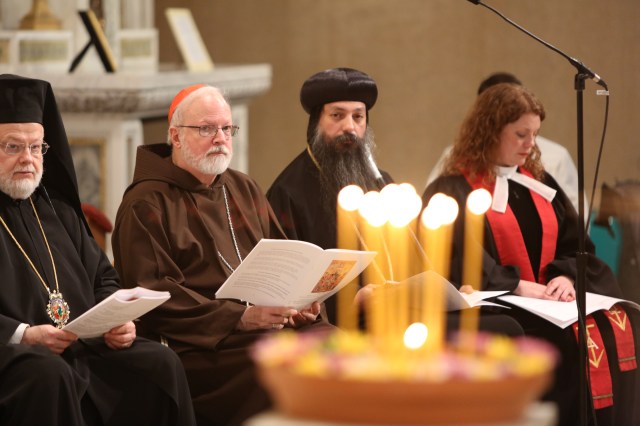
While we pray for peace and an end to bigotry of any sort what are we doing to assist in ending the violence and hatred we see. Prayer is certainly a good place to begin, but what else can we do. Abraham in his pleading and negotiating with God is asking for all of Sodom due to the fact that there are a certain number of good people in the city. We do not see an explanation of what this good person looks like but I think we all have a good idea what they do.

These are the people working toward peace and a civil, moral society eliminating the labels, bigotry and violence that is prevalent. They are not answering violence with an ever escalating violence. They are not separating people into different groups so they can feel superior to them, but they are peacefully trying to bring all sides to an understanding. Yes, we are all different people, but in our hearts we are all looking for the same thing, a peaceful world where we can live with no fear. A world in which all people regardless of their race, gender, culture, financial status or religion can live together and work towardthe betterment of all people. This is truly the world in which we all would like to live, where everyone has an equal chance at bettering their life. Abraham believes that this can come about if there are a small group of people who are working toward this ideal.

1080265_10153117896625398_1368910373_n

Today we also hear from Jesus how we are called to pray, we hear the words we are all familiar with and that we recite seemingly without thinking about them. We hear also that God wants to answer our prayers, we need to but ask. If we seek we will find, ask and we shall receive. What if we are the ones called on by God to be the answer to someone else’s prayer?

Jesus reminds us that if we are asked in the middle of the night to provide food or shelter to another we should be offering it. We should not be offering simply because we feel obligated, but because we see so much misery we are called to assist in ending it.

Paul reminds us in the reading today the Jesus was sent to take our sins away, calling us to be the people of God through the waters of baptism. We are cleansed of our sins and are called to a new life. This new life is one in which we are expected to assist others, not for our own sake, but to answer their prayers in life.

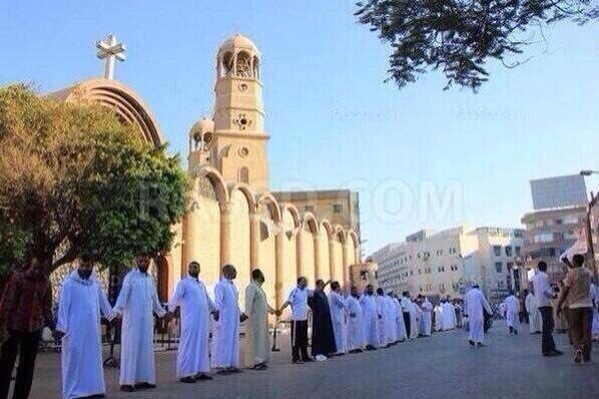
How many of us have ever thought that when we are assisting others that we are God conduit to answering that person’s prayer? By simply being there when they needed someone to talk with or providing a loaf of bread we may be answering the prayer of the person before us. This prayer they have been asking to be answered multiple times in different places and different ways. Their persistence in prayer in the end may be answered by you.

huddleCLR

We may never know that we were the answer to their prayer, just as there were many in Israel and the world that did not realize the Jesus was the answer to their prayers for a teacher, healer and forgiver of sin.

I realize as I have gotten older that my prayers have been answered, not necessarily in the time that I sought or even always in the way I would have liked. Still they were answered, out of Gods abundant mercy and love they have been answered.

This mercy and love need to come to the forefront of the world today. I am not under the illusion that we will all be sitting around together and singing Kumbaya together, but if we can show mercy to those around us, evil will begin to retreat. We often see more progress in the world from non-violent methods of protest than from violent forms of protest. Dorothy Day and Martin Luther King accomplished many things by not answering violence with violence, or hatred with hatred.

Through our persistence in prayer and our actions to those around us, we have the ability to have our own prayers answered. There is also in prayer the reminder that as God forgives us our sins we are called to forgive those who have sinned against us. While this can be extremely difficult, remember as he was being crucified Jesus prayed “Father, forgive them for they know not what they do.”

All prayer is worthy of an answer and when we are persistent in prayer, and behave as we are hoping to be treated, then through that persistence and action prayers will be answered. There is this idea that a prayer needs to be answered exactly as we ask, but God may answer it in a way in which it will lead you down a different path than you are on. We need to be open to His answer, not ours, because through the Holy Spirit he will answer our prayers and evil in all its forms will be defeated.