Expiation for our Sins

Readings: Acts 3:13-15, 17-19; Ps 4:2, 4, 7-8, 9: 1 Jn 2:1-5a; Lk 24:35-48

“Thus it is written that the Christ would suffer 
and rise from the dead on the third day 
and that repentance, for the forgiveness of sins, 
would be preached in his name 
to all the nations, beginning from Jerusalem.” 

We hear a lot about repentance during this time of year. Last week we were reminded on Divine Mercy Sunday of God’s great mercy that he is willing to shower on those who ask for it. We are all called to repentance because we all sin against God. Some sins are bigger and some are smaller though we all sin.  

We need to be mindful of how we act and how we speak in order to do our best to avoid sin. In being mindful about sin we are also reminded that no matter the level or gravity of our sin God’s mercy is available to us as we are reminded of in the reading from the Acts of the Apostles today; 

The author of life you put to death, 
but God raised him from the dead; of this we are witnesses. 
Now I know, brothers, 
that you acted out of ignorance, just as your leaders did; 
but God has thus brought to fulfillment 
what he had announced beforehand 
through the mouth of all the prophets, 
that his Christ would suffer. 
Repent, therefore, and be converted, that your sins may be wiped away.” 

As we can see from this reading even those who called for Christ’s crucifixion God is willing to forgive if they repent. This means that we should not believe that any sin we have committed is unforgiveable for God. We, however, are still human and the forgiveness of a grave sin, whether we committed it or someone else did it to us can seem to be unforgiveable. We will shortly remind ourselves in the Our Father we proclaim “forgive us our trespasses, as we forgive those who trespass against us.” 

Do we have a willingness to forgive those who have harmed us either physically, emotionally or spiritually? As I just mentioned the words we say in the Our Father should carry some weight in making sure that we are willing to forgive others. This is not an easy task I know since I also struggle at times with this aspect of our faith. When we are not willing to forgive those who have harmed us, why should God be willing to forgive us? This is also part of our call to repentance, not just for those sins we have committed, but also for the ability to forgive others who may have injured us in some way.  

During this Eastertide we should be comforted by knowing that should we be willing to repent of our sins God is willing to forgive them so we can remain in communion with him. We all know the grave sins that we should not commit, such as murder, adultery, stealing and other aspects from the commandments that Moses gave to the Israelites on their way from Egypt to the promised land. 

Do we, however, know or believe in some of the minor sins that we can all be guilty of at times? Some of these, though not an exhaustive list are gossiping, those little white lies, and unwillingness to forgive others. Some of us think since there is no physical harm brought to anyone by these sins then there is no sin. In gossiping about someone then we make them out to be someone they are not and people’s opinions of them change. This can cause them friendships, promotions and after that they can lose faith. There is no physical harm, but there is still harm that comes from it.  

I know that gossiping is a common thing amongst many people, they think that they are in on a little secret and want to be the person who breaks the story to their world. The issue is that in most cases they only know one side of the story and in order to do as God wills we need to know all sides of this story. While it may become less enticing when you know both sides it is the only way to be able to understand what happened.  

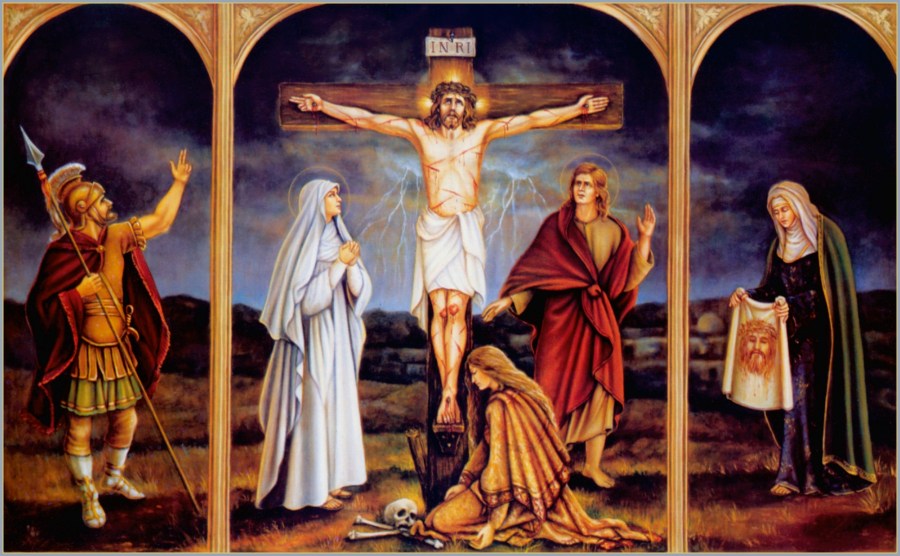
How willing are we to forgive those who injure us? This injury could be physical, emotional or spiritual. A lot of times this forgiveness is decided upon based on the level of hurt caused by the other person. But as we see represented by the crucifix there is no level of hurt that is unforgiveable for God. We are called to be just as forgiving as God. We are reminded of this when Jesus tells the people when he gives his sermon on the mount. So be perfect,* just as your heavenly Father is perfect. 

This call to perfection is something that is difficult for us to attain. We would like to think that if we have led a good life, not gone against the 10 commandments, come to church every Sunday that we have attained a life that is pleasing to God. Yes this is a great first step to pleasing God with our life, yet we are called to be so much more.  

Jesus was very counter cultural in his time. He made women a primary part of his ministry, he told everyone that not only were they to forgive their friends, but also to forgive their enemies. The things that are asked of us today are just as counter cultural. We are called to stand up and fight for the child in the womb who has no voice of their own. We are called to stand and defend the creation that God has asked us to be stewards of. We are now also being called to defend the natural law which God put in place.  

Much of this that we are called to do is going to put us on the opposite side of our family, friends and sometimes our bosses. This can lead to some very interesting interactions, but during this Easter season we are called to repent of anything which we have done to harm not only those who agree with us, but also for that which we have done to harm those who disagree with us. We can find strength in knowing that Christ understands our most inner feelings in forgiving those we dislike. He understands it so much that he was willing to give us His Body and Blood to sustain us during these times of trial.  

When he said this he knew we would need this fortification to repent of our own ways that may injure others, even if they have or are trying to injure us. After all he asked for God to forgive those people who hung him on a cross. His apostles continued to preach this message of repentance and forgiveness to all as we have heard in the readings today. We are reminded in the reading from John; 

But if anyone does sin, we have an Advocate with the Father, 
Jesus Christ the righteous one. 
He is expiation for our sins, 
and not for our sins only but for those of the whole world. 

While we are reminded that Christ died for the expiation of the sins of the world, we are also reminded that we are to emulate his life in how we live. Not just doing the bare minimum, but to go above and beyond. Are we ready to show those around us what a truly Holy life should be? We have an advocate with God for when we falter and we have the strength of His Body and Blood to help keep us on track. When we leave church today we should all strive to be perfect just as our heavenly Father is perfect. After all we have just listened to His word and partaken of His son’s body and blood. I ask again are you ready to strive for that heavenly perfection? 
We are called to be the Yeast

The gospel today is a continuation of the sermon of the parables we heard last week. Today we hear three more parables to help the followers of Christ understand the Kingdom of Heaven. These messages are very important to society today, yet we are not necessarily in tune with them as we lead our lives.

The society of our time has degraded to a society that upholds the right of every individual to believe themselves to be God. As a line in the movie, Rudy reminds me, “There are two things in this life I have learned. The first is there is a God and the second is I am not he.” Our culture of relativism has exploded even though it was pointed out that the path we were headed down would lead to trouble.

The other portion of our culture of relativism is we have begun to be the judges of everyone around us. We are all guilty of this at times, judging what someone does because it is not in line with what we believe. This judgment is wrong. We are reminded in the first reading from Wisdom, there is only one judge, and we are not it.

God is that one judge who can truly judge the person, he is the only one who truly knows what is in that person’s heart and he has the ability to remove the sin or condemn the person for that sin. We don’t, as much as we would like to think we do, have the power to decide who gets to heaven and who will end up in Gehenna. As it finishes in the reading from Wisdom;

And you taught your people, by these deeds,
that those who are just must be kind;
and you gave your children good ground for hope
that you would permit repentance for their sins.

We inherently know this from what we have been taught all our lives and by what God has written on our hearts. We also have the benefit of taking advantage of this grace of redemption through the sacrament of reconciliation.

The parables today do a nice job of tying all this together for us. As I mentioned earlier, all around us there is sin going on with little to no repentance, yet in the parable of the wheat and the darnel we are told that this is designed to grow together. Why would God who is all-powerful allow good and evil to coexist?

God wants everyone to have the opportunity to join Christ and be in Heaven. We all have the opportunity, no matter how bad our sins, to be forgiven for our sins. Of course, we all know that there are those around us who are truly sorry for their sins, and there are those around us who are not sorry for their sins. This is what we hear when we hear;

He replied, ‘No, if you pull up the weeds
you might uproot the wheat along with them.
Let them grow together until harvest;
then at harvest time I will say to the harvesters,
“First collect the weeds and tie them in bundles for burning;
but gather the wheat into my barn.”‘”

This is where the reading from Wisdom ties in. God is the one who will judge people for what is in their hearts on the last day. Those who are repentant for their sins he will gather into Heaven with himself at the table of plenty. The ones who are not repentant will go to Gehenna to suffer forever. We as the landowner remind his gardeners that we cannot decide who these people are because we do not have the capacity to decide who will turn to God and repent of their sins and those who will not.

All of this requires from us a faith that needs to continue to grow. Though our faith may be no more than a small mustard seed, if we continue to follow Christ’s teaching that seed will grow larger and will allow those around us to take shelter in our faith as their faith begins to grow.

As the other parable we heard today reminds us, we are called to be the yeast that is added to the flour as we were baptized as priest prophet, and king. Our faith in conjunction with the Spirit work together to leaven those around us to bring all of us closer to God.

How do we continue to have the strength to do this in the face of the current climate in our society. God understands that we are truly challenged in the society we live in today. Just look at all the things we are dealing with today. People are confused about who they were made to be by God at their very essence. We are called not to condemn these confused folks, but to be the yeast that will allow them to see into their hearts what God has created them to be. After all, he named us before we were born so he knows who we are called to be as has created us as the correct being from our conception.

To have the strength to lovingly, pastorally, and compassionately show those around us the right way is not necessarily just to agree with their choices, but to show them when they choose to act as God has created them their life will have more meaning and will be totally fulfilling.

To strengthen us in this effort Christ has given us his Body and Blood which we will receive shortly. When we receive the Eucharist we receive Christ’s Body, Blood, Soul, and Divinity within us. This is to fortify us in the call which God has placed on each of our hearts. When we receive this heavenly food we are fortified to be the people of God we profess ourselves to be.

After we receive the grace of Christ in His body and blood we are called to go forth and lead our lives as the yeast to leaven all those we come in contact with. This should be seen in our attitude toward those around us and our peaceful attitude in the fire of the storm will allow us to be like the farmer and allow the wheat to grow amongst the weeds even if we cannot tell the wheat from the weeds as we are growing. IT will also give those around us the opportunity to see their sins and repent to become the wheat that will be harvested into God’s barn.

The question we all need to answer for ourselves is Do we want to be the yeast to help the Spirit leaven those around us to help them see that we are repentant for our sins. We have become more joyful and compassionate by following the Christian way. By leading by example and not by judgment we will bring more people to God to ask for forgiveness and to be turned from weeds to wheat. Are we ready to be the yeast so those around us can be leavened for God?

Works of Mercy

Homily for 18th Sunday in Ordinary time

Ecc 1:2; 2:21-23; Col 3:1-5, 9-11; Lk 12:13-21

We all have lots of stuff. We have things we have purchased that we use all the time and need replacement, we have things we bought that we thought we would use but used it once and there it sits. We have things that were given to us as family heirlooms, and we have things that we would like to become family heirlooms. All this stuff keeps us occupied with things of this world.

When we watch TV all we see are ads for us to buy more stuff. That new car that will make life easier, the new cereal that is all the rage, those products that are advertised that we would prefer not to hear about in a public forum. There are even ads for drugs that may help us with whatever we may be suffering from.

All of this stuff and we still want more, does any of this remind you of the story we hear in today’s Gospel? The story of the rich man, that instead of helping others with all his excess grain decides he needs to build bigger barns to store it rather than easing the burden of those less fortunate. Jesus has a name for him, he calls him a Fool. He believes he will live long enough to enjoy the fruits of excess he has accumulated, yet God has decided that this night that he has stored it all away for himself, he will pass away never getting the chance to enjoy it.

We all may know a person or two that always has the latest and greatest thing. They need to be the first with the new technology, the new car, the new house, or whatever else they seem to think will make them happy. There is one thing we need to remember though, and I see it on a daily basis, when we leave this world, none of that stuff matters. It doesn’t matter at the funeral home or the cemetery and it certainly does not matter to the family left behind.

As we hear in the first reading; vanity of vanities!  All things are vanity!  All of the things we obtain on this earth are indeed vanity. We go after more and more thinking more stuff will make us happy. We see where that has gotten the world. When we move toward believing in things and wanting just those material goods that we think will make us better, we move away from God and begin to worship at the altar of consumerism.

While seeking things to help us live more comfortably is not a bad thing, if can lead us down a path to distance ourselves from what we are called to be. We are called to be the people who show compassion and empathy to those around us. We are called to help those in need. The church has given us a great way to do this with the Corporal and Spiritual works of mercy. While we may not, on a daily basis, be able to visit the imprisoned, or instruct the ignorant. We can on a daily basis pray for the living and the dead and forgive those who have hurt us.

This is what Saint Paul is calling us to do when he says;

If you were raised with Christ, seek what is above,
where Christ is seated at the right hand of God.
Think of what is above, not of what is on earth.

When we do this we begin to lead a life that is more centered on Christ and less on the material world. These things will allow us to store things up, not for this life, but for the next. This is the goal for all Christians, get to heaven. While we agree God’s mercy, forgiveness and compassion are freely given, there are some who believe that all they need to do is say they take Christ as their Lord and Savior and they have punched their ticker to heaven. This seemingly with some leads to them mistakenly believing that they are now free to live their life their way. We often hear such folks ask us if we are saved. MY response to that is I’m working on it.

The more we participate in the Corporal and Spiritual works of Mercy, the more we store things up in heaven, which is where we should want most of our “stuff” Accomplishing these tasks and then being able to show the joy that comes from doing so will lead us to a place where we are in communion with God and His church.

Jesus taught us that God’ mercy is freely given, he has also taught us that we need to do these works of mercy to remain in communion with God. If we choose to ignore this calling we are essentially turning our back on God, in order to live a life based on our beliefs not on Christ’s teaching. He reminds us of this in the story today about the foolish rich man. He also reminds us when he tells the story of separating the sheep and the goats. The sheep assisted those in need and the goats ignored those in need. If you read this passage you can see where some of the works of mercy are founded on.

Which would we rather be, the foolish rich man, or the sheep? Me personally I would like to be counted among the sheep, though I have made many mistakes and acted more like the foolish man we hear about today.

Are we ready to pick up our cross?

According to society today we are told to believe that we are the ultimate deciders between what is right and what is wrong. No matter what we believe, if it is right for us, then it is right and no matter what anyone else says we get to make that determination. There are also no consequences to whatever we deem to be right for us. 

This has led to a society where no one can agree with anyone and rather than listening to hear the other persons side we holler and categorize them as any number of different isms that are out there. This has also led to a society that does not seem to value life in the way we are accustomed to. There is a call for unlimited abortion, euthanasia, the death penalty and a lot of other things that lead to the death of a person. 

Suffering is not seen as something that can be used for good, but rather we need to eliminate the suffering regardless of the consequences. 

There was a young lady a few years ago who was diagnosed with cancer and rather than go through the chemo treatments and other various treatments that were recommended for her she would have a doctor assist in ending her life. She did not want to suffer if the treatments did not work. It was not a matter of whether those around her wanted her around, she had made up her mind that suffering was something she was not willing to endure. She had no faith to pin her hope on.

The readings we hear today tell a different story. In Isaiah we hear that he is ready to suffer all types of indignity in order to profess God’s word to the people of Israel. Going so far as to say “I gave my back to those who beat me, my cheeks to those who plucked my beard; my face I did not shield from buffets and spitting.”

He was willing to die for following what God instructed him to do. I will say that I have never heard God tell me to do anything, but I would hope that I would be willing to be like Isaiah and Christ and follow where he leads me. 

God has never promised a life without suffering, He has always promised that He would be there with us and support us during that suffering. This is the faith we are called to have. Our faith is where our hope comes from. Support each other not only in the good times, but in the times of suffering as well. James reminds us of what our faith is supposed to look like. Not one of simply professing to the world we know Christ and therefore we are saved. Then going out and acting in many ways in contradiction to what Christ taught. Mutilating our bodies to look like something God did not create us to be. Taking the lives of the most vulnerable, whether they be the unborn or the frail, take the lives of criminals who have admittedly been convicted of horrendous crimes.

We can look at the bible to find so many different instances where God has created something great from something we find offensive. David was an adulterer, and a murderer yet he led the kingdom of Israel to great heights because he listened to God and his advisors and repented of his sins. 

Jonah ignored God’s word and headed so far away from Nineveh that he ended up in a whale, only to be sent to Nineveh to cause the whole town to repent so they would be spared God’s wrath.

Matthew the tax collector was a cheat, and a thief, but ended up one of the Apostles. 

We see so many other instances in the bible of good coming from evil that we should pay attention to them. In all of this we are called to have faith. As James reminds us today though we need to show our faith not by our words alone when he says;

Indeed someone might say,

“You have faith and I have works.” 

Demonstrate your faith to me without works,

and I will demonstrate my faith to you from my works.

When our faith is demonstrated to those around us even in times of suffering then our faith will grow and they will come to know that suffering is not the end. Christ reminds us today that we all have our own cross to bear, some of these crosses will carry with them great suffering. All we need to do is look at Christ and how he dies to know this. 

We all have trouble with this, even Peter, the rock whom Christ would build his church on could not understand this. He tries to tell Jesus that they will defend him when the time comes. Of course we all know what actually happened when that time came. They were still thinking as humans do and not as God does.

When we live our lives by the Beatitudes and perform the corporal and spiritual works of mercy which we are called to do we find that our suffering is small in comparison to those around us. This means that even in the face of a society that does not seem to value life we need to show by our actions the faith we have in the sanctity of every human life.

I know as a parish we do our best to show this to those around us, we support those who choose life over abortion, we work with those in prison to show them another way, we let our governement representatives know that life is precious no matter the state it is in, the damage that the person did, or the suffering which we witness. 

Doing all of these things is hard and we will suffer at times because of these beliefs, but Christ reminds us today when we hear;

He summoned the crowd with his disciples and said to them,

“Whoever wishes to come after me must deny himself,

take up his cross, and follow me. 

For whoever wishes to save his life will lose it,

but whoever loses his life for my sake

and that of the gospel will save it.”

We should all do our best to live by these words. We should tell our egos to get out of the way and let God work through us, just as he did through Jonah, David, Peter, Matthew, and the rest of the apostles. When we do this we have the opportunity to show those around us how to listen to opposing views and come to an agreement that is in line with the truth. Christ did this right up until the end of his human life, even forgiving those who put him through all that suffering. This effort will require us to let the Holy Spirit into our community to guide us along this path. We will all be called to do different things as God uses us each for the charisms he has endowed us with. By picking up our cross and following Christ we get to show those around us by our actions where our faith and hope come from. We all need to take the first step and pick up our cross and follow Christ.

God’s plan for Redemption

We are all familiar with the disciples on the road to Emmaus, how two men were walking together and were joined by Christ risen from the dead. Well, they did not recognize Christ even though they had followed him for a while before he was crucified. When they first recognized him was when he provided them with the Eucharist.

The Gospel today is the continuation of that story. They did not wait until morning to go back to the apostles. They ran back immediately to them. They wanted to recount their story and how Christ, while they were walking, explained all of salvation history to them. Christ did not even give them enough time to tell their story before he showed up in that upper room again.

Christ’s resurrection, which we celebrate throughout the Easter season and beyond, needs to mean something. Christ gives us His Body and Blood when he tells his disciples that if you do not eat the Son of Man’s flesh and drink His blood, you do not have life within you.

We see today in the Acts of the Apostles reading the reason for the resurrection. “Now I know, brothers, that you acted out of ignorance, just as your leaders did; but God has thus brought to fulfillment what he had announced beforehand through the mouth of all the prophets,
that his Christ would suffer. Repent, therefore, and be converted, that your sins may be wiped away.”

We are all called to repent of our sins and lead a new life in Christ. If we choose to do this, we will be mocked, scorned, and marginalized. We already see this happening in our society today. The voices that call for reform from a Christian perspective are being put to shame and not followed.

Our society’s current culture is not one of love and compassion but one of division and judgment.  This can be seen in how we treat those who are less fortunate, from the baby in the womb to the frail elderly. We, as Christians, are called to defend life from conception to natural death. This has always been the case since the time of Christ, yet many claim to be Christian who do not believe this. Many in the pews in Catholic churches around the country do not believe this when the Catholic church has been the most steadfast in supporting life.

Our society’s culture has eroded to the point where you are shouted down if you say something that goes against what those in power espouse. We, as Christians, need to stand up and be recognized for the valuable input we can put forward. This will take courage, but no one ever said that being a Christian would be easy in this life. We are called to be counter-cultural.

Christ showed us how to do this and as he reminds his Apostles in today’s Gospel, all that happened to him was foretold in the law of Moses and by the prophets. He walked amongst the Jewish people preaching a Gospel of inclusion, not exclusion, love, not hate, and a repentance of sins. How many of us have taken advantage of the sacrament of reconciliation during Lent and this Easter season? How many of us have not been to the sacrament of reconciliation in many years, not months? This sacrament is where we get to show our repentance, but it seems that many believe that there is nothing in their lives for them to repent.

This leads to the belief that, as Frank Sinatra so eloquently put it, I did it my way. Well, when we lead our lives in this manner, it leads to the belief that we are the only ones in control. Through his life, death, and resurrection, Christ shows us that without Him, we will not have eternal life.

John reminds us today what happens when we do not believe that Christ should have any control over our lives. “Those who say, “I know him,” but do not keep his commandments are liars, and the truth is not in them. But whoever keeps his word, the love of God is truly perfected in him.”

This may seem harsh, but it seems to be what we see being played out in society today. There are lots of people who claim to know Christ, yet they then go and do the exact opposite of what Christ taught us.

When we look at the world around us, as I have described it, we can tend to be discouraged. The opening line of the Gospel refers to the men from Emmaus who were despondent over the crucifixion of Christ. When they had their encounter with Christ, they became so energized they needed to retrace their steps and recall the events of their walk with the apostles.

We are almost in the middle of the Easter season. Have we had an encounter with Christ yet? IF not we, need to begin looking for this encounter. We have the opportunity to have Christ within us when we receive the Eucharist today. This food we receive helps us on our journey through this life by allowing us to still follow Christ even in the face of the culture we see around us today.

Christ tells the apostles today that they are witnesses to His life, death, and resurrection as the prophets foretold it. We, too, are witnesses to this same story every time we view a crucifix in a Catholic Church or hanging in our home, even when we wear one as a necklace. Since we are witnesses to His Passion, we are called to go and preach his Gospel of repentance to the whole world. To do so does not mean that we are called to judge others, but we are called to live our lives by following His commandments and precepts. This can be done by example much more effectively than by words.

When we go forth from Mass today, we should be on the lookout for our own encounter with Christ in the world. We should then show our belief in Christ by following his teaching and living our lives based on these and not on our way of thinking. When more Christians begin to act like this, we will see our culture change, and our lives become more peaceful. Christ reminds us many times not to be afraid to live in this manner, and he even reminds the apostles that His peace will be with them as they go forward. He promises to do the same for us. So, let’s all show the same courage of conviction that the apostles will begin to show come Pentecost.

Do we prefer God’s way or our own

Karen and I had dinner this week with a couple we consider friends. He was ordained with me and there were many opportunities for us to get together and learn about each other. Over the course of our academic and pastoral formation, a time that meant we were together all day once a month and then there were interactions online and over the phone during this process. You get to know people reasonably well, you learn about their families, you go through their struggles with them, and we learn to assist one another in times of stress.

I bring this up because this deacon has posted some questions on Facebook recently that revolve around the whole conversation on race that is going on in this country today. These questions came from a place of wanting answers to help him understand these issues from a different perspective than his. The problem was that the comments on these posts were generally filled with disparaging remarks from all sides that he would dare ask that question. From one side he heard there is no such thing as systemic racism and from the other side he was told because of the color of his skin he could not understand their point of view.

The experience he had on Facebook found me pondering the readings we hear today from a different perspective. The line from Isaiah hit home; “For my thoughts are not your thoughts, nor are your ways my ways, says the LORD. As high as the heavens are above the earth, so high are my ways above your ways and my thoughts above your thoughts.” My friend was looking for help in answers in a public forum, which you would think would be open to these discussions. The problem becomes clear in today’s culture God’s ways are definitely not our ways.

God forgives those who ask for forgiveness, even to the point of allowing them into heaven. It does not matter when this forgiveness is asked for. Society wants to hold your sins, past and present against you and beat you down with them. I hear from my conservative friends that their liberal friends do not listen to them, and then I hear the same thing from my liberal friends about their conservative friends. If we don’t listen how will we gain an understanding?

Then Friday night we hear about the passing of Ruth Bader Ginsburg one of the Supreme Court Justices. She was considered one of if not the most liberal of the justices on the Supreme Court, yet her closest friend on the court was the late Antonin Scalia, considered at the time one of the most conservative justices on the court. This friendship came from the respect that each gained for the other during their time on the court. During this time even though they were usually on opposite sides of a decision they each listened to the other’s point of view to try and gain an understanding of the rationale behind their decision. These conversations were never had with malice, belittling or talking down to the other just because they disagreed. What would our society be like if we had this same process play out on Facebook and other places of public discourse? Instead we have screaming, belittling, and an out of hand dismissal of the discussion from the side which we oppose.

I admit, it is easy to simply dismiss an argument, or statement you disagree with, but that won’t change people’s hearts or minds. Listening to one another, even if we disagree vehemently, will lead to a better society. This needs to begin with each one of us, we need to have our own change of heart first and be willing to listen to each other, not shout over one another.

The Gospel reminds us again that God’s ways are not our ways. The landowner hires people throughout the day and then at the time for paying gives the same wage to each person regardless of when they began working that day. As I said earlier in God’s eyes it does not make a difference when we realize we should follow his guidance, it just matters that we do. The perfect example of this is the thief on the cross next to Jesus. He repents of his sins and is welcomed into heaven, even though his crime at the time warranted the crucifixion he was suffering. The last shall be first and the first shall be last.

We are all called the be equal participants in God’s Kingdom, not matter when we get there. Paul reminds us today how we should live. We also need to remember where Paul came from to truly understand the life-giving power of Christ. He was a persecutor of the early Christians, to the point he was on his way to rounding them up when Christ got to him and made him see with newly opened eyes what life could be like. His letter to the Philippians today shows the total transformation that came to Paul. “Christ will be magnified in my body, whether by life or by death.  For to me life is Christ, and death is gain.”

While Paul was not afraid to fight, verbally, for what he believed in, he also made sure that he called on the Spirit to guide him in those times of the fight. We are called to do the same, we are called to fight for what we believe in, we are not called to judge those who disagree with us as less worthy of Christ’s love and forgiveness.

Christ’s love and forgiveness is for ALL people, regardless of their political persuasion, race, gender, social class, or economic status. Our society wants us to believe that this should not be the case. While God sees all no matter where they come from as equal to one another, society likes and needs to keep putting us into groups. This allows those in power to determine winners and loser by the group you are in. God’s ways are not our ways. When we move closer to God’s way we become closer to God and we have his Spirit to help guide us. God does not care when we move toward his way, only that we do so that we can gain eternity with him. He knows it is not going to be easy so he sent Christ to be our strength. Through the Spirit we all receive Christ in the Eucharist we will receive shortly.

Are we ready to use the strength that comes from the Eucharist and the other sacraments to begin to act more in accordance with God’s way or will we continue to believe and follow our own way?

How large is our Faith

I was told once by some wise people that if I put my mind to something I could accomplish the task. While there have been many times that I have ignored this advise there were times when I followed it. I am not saying that I had all this faith in myself, but I knew if it was something that seemed to be where I needed to head, I would be able to get there. An example of this for me was becoming a deacon. I for years was away from the church but managed still to stay tied to my faith.
I was willing to explore other Christian faiths because I believed that the Catholic faith had too many rules. Yet in those explorations I actually found the opposite, other faiths had more rules that seemed less inclusive and more judgmental. I know that there are plenty of judgmental folks who are in the Catholic faith as well, but the concept of the faith is that we are to leave the judging of others to God. The path to the diaconate was a very winding road for me which included many places where I could have been led astray.
My faith was called into question along the journey, not only by myself, but by those who knew me best. The perfect example of this was when my family was at lunch after ordination my two uncles, one was my Godfather and the other was my confirmation sponsor, looked at each other and made an interesting comment. They said they never imagined that one of our family would be ordained, especially me since they knew my long winding path to that point.
You see my faith was only the size of a mustard seed and I didn’t think that was enough, but as Christ reminds us today the mustard seed grows into a large bush, large enough to have birds nest and rest in it. You see a mustard seed which is only about 2 millimeters in diameter can grow as large as 30 ft. tall. Pretty amazing. That is not the only amazing part about the small size of the seed as Jesus mentions in a later chapter of Matthew that “He said to them, “Because of your little faith. Amen, I say to you, if you have faith the size of a mustard seed, you will say to this mountain, ‘Move from here to there,’ and it will move. Nothing will be impossible for you.” (Matthew 17:20)
We are all called to use the faith we have to unite people not to divide them, that is what all Christians should do. This means that we will not always agree with others, but they are also men and women of God who deserve our respect. If we judge the person based on their actions we have a tendency to lose perspective and respect for them. This has led our country and our church to do some things which are not in keeping with what the faith teaches us. Our Declaration of Independence as well as our faith have a premise in common. ALL men are created equal. Now this statement does not exclude women because as we see Jesus throughout the Gospels treats women with the same respect he does the men of his time. His time in history was certainly not kind to women and that attitude still prevails in some people today, women being second class citizens. They thought that was morally ok, we know better if we pay attention to the Gospels.
Christ also treated those who were different than he, by the color of their skin, their nationality, or any other difference with this same type of respect. This type of respect can lead to the end of racism if we all follow his lead. This means we are all called to raise up those who are on the periphery with no concern about whether they look like us, talk like us, or move in the same political circles as we do.
This respect for the other is what has made this country a beacon for the world, even though from the inside we know we as a country did not always follow what we professed to the outside. Based on what we see today we still do not necessarily act in the way we should. The rest of the world is watching us at this time and seeing the internal tensions that were always under the surface. They also see this tension in the Church as we go back and forth with each other about the “right” way to practice our faith.
The reading from Wisdom today that while God may be the source of Justice in the world he is a compassionate God; “But though you are master of might, you judge with clemency, and with much lenience you govern us; for power, whenever you will, attends you. And you taught your people, by these deeds, that those who are just must be kind; and you gave your children good ground for hope that you would permit repentance for their sins.”
We should have hope in God, that he will make sure that justice is served and that those who believe in him and follow him will be with him for eternity. This hope in God should allow our seeds of faith to grow, just as yeast allows dough to rise.
If we continue to grow in our faith, especially during times of trial we know that we are being guided by the Spirit during our time of weakness. Through these current times of trial and strife that we are going through with the protests, riots and the pandemic we need to grow closer to God, not move farther away. Satan wants us to move away, but if we use the seed of faith we have, no matter how big it is, the Spirit will keep our hope alive and will help guide us to the point where we can grow closer to him.
This way we will be like the wheat that grew within the weeds, we will be chosen to go to God, not like the weeds which are put in the fire. The faith we have is meant to be shared, not in a judgmental way, but in a way that shows others that we are following God’s path and that is the path of unity not division. When we take our mustard seed size faith and allow it to grow, we will then be able to shine like stars for those around us. If the entire church does this, then we begin to change the world as light will always overcome darkness.
We need to remember one last thing. “But if we deny him he will deny us. If we are unfaithful he will still remain faithful, for he cannot deny himself.” (2 Timothy 2:12,13)
Now let us go forward showing the world the light from Christ by living our Christian faith, helping to remind people who have denied Him, that He is the way.

How can we be an example

Life as we know it has certainly changed since March. We have the quarantine and stay at home orders to protect lives from the pandemic. Then we had the incident with George Floyd, rightly condemned and then the protests that have grown from that incident. We also have the riots and destruction of property that have grown from some of those protests that were peaceful.

This has led to a heightened anxiety among many people. This anxiety can lead to additional stresses and health problems due to that stress. Then there seems to be no lack of rhetoric coming from all sides in relation to the protests. We have the people on one side saying shut down these protests and send to jail those who resist and cause damage to property or people. Then there are people on the other side saying the protests are a right of the people and if there is damage or rioting it is appropriate based on the injustice to the black race over the history of our country. Neither side bothers to listen to the other, they are just trying to shout louder than the other.

How are we as Christians supposed to react to all of this that goes on around us. The first reading from the Second Book of Kings tells that Elisha the prophet was welcomed with open arms into a home in a foreign land. As a matter of fact he was so welcomed that the woman and her husband made a room for him to stay in whenever he came through town. Her compassion and her willingness to welcome the stranger, was rewarded with a son, the heir to her husband that she was lacking. Her suffering in this regard was relieved.

The letter from St. Paul to the Romans reminds us that we are to “think of yourselves as dead to sin and living for God in Christ Jesus.“ He is reminding us of the call we are given when we are baptized. As we go into the water we are to die to sin. Coming out of the water we are called be like Christ as priest, prophet, and king.

Through this call we can better understand what Jesus says in today’s Gospel. “Whoever loves father or mother more than me is not worthy of me, and whoever loves son or daughter more than me is not worthy of me; and whoever does not take up his cross and follow after me is not worthy of me.

Whoever finds his life will lose it, and whoever loses his life for my sake will find it.”
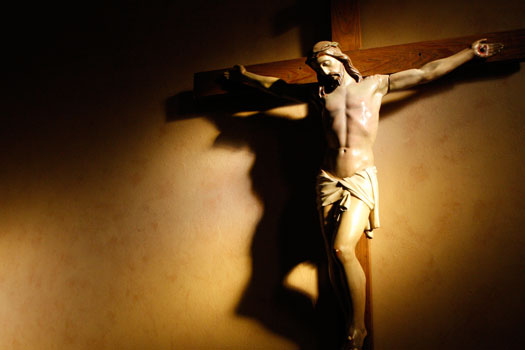
We are called to love God first among all. This is what we were baptized into and we need to remember that there was never a promise from Christ that we would not suffer at one time or another in our lives. We are called to be willing to suffer as Christ suffered. To remember the ultimate suffering he endured we need look no further than the crucifix hanging above us. As Fr. Tom has reminded us the crucifix in our parish is of the still living Christ on the cross. It should be a strong reminder that his suffering was not small or insignificant. It was immense, but he willingly let himself suffer to allow us to be forgiven for our sins.

This forgiveness of sins and promise of everlasting life was not just for the self-righteous who claim to know the rules or law and follow it to a tee. Think of the Pharisees of his time or in today’s day and age those who believe that they are the only ones with the knowledge to keep things going. Of course, they would eliminate entire blocks of people because they do not follow the rules they prescribe.

Then there are those who believe that everything must be torn down to begin again. Jesus reminded the Pharisees of this when he said, he had not been sent to abolish the law, but to fulfill the law. He wanted those around to come with him to further the mission. He did send his disciples into the great unknown to baptize the peoples of the world in the name of the Father and the Son and the Holy Spirit. This was to expand the tent of the Jewish faithful to beyond just Israel, but to the whole world.

In doing this we see from both sides a great way to exclude large groups of people from their beliefs. We, as Christians, are called to make sure that those large groups of people, normally the downtrodden, are heard and cared for. What would happen in our own community and the greater world if instead of simply offering a rebuttal we actually listen to the other person. This would lead to understanding. It may not necessarily lead to agreement with their points, but at least we would know their reasoning. Then because as humans we have the ability to reason we can begin a real conversation based on sound reasoning that could lead to a solution to the problems.

Those of you who are married and those of you have children should already be capable of doing this. While it may not be an easy thing to do.It is the correct thing to do and it eventually leads to a much brighter future with less anxiety and stress. I reminded you earlier though that this does not necessarily mean there will be no suffering.

We as human beings have egos, sometimes egos big enough to think we are God. This will be why there will be suffering, we do not want to trust that if we follow God’s plan it will work out. We think our plan is better, after all we have done all the work to make sure we contort our reasoning to believe our way is the only way. We are taught by the Pharisees of our day that we are the ultimate arbiters of our lives and everything in it.

Jesus reminds the apostles again, that above all we are to put Christ first in our lives, losing our own personal ego driven lives. We are called to lead lives of service (prophet), compassion (priest) and caring for everyone we meet (king), the neighbor and the stranger alike. Are we ready for this radical reimagining of what our lives should be? While bishops and priests can help guide people in this direction it is up to the lay faithful to bring it about in the society in which we live. The lay faithful have the ability to show the world what a Christian is called to be. Bishops and priests have an influence over the people of their parish and diocese. The lay faithful carry that message forward in how they live their lives. The Christian faith did not grow only because of the apostles, but because of those who converted and truly led this new life. Are we ready to put aside our ego, empty ourselves and let Christ fill us up to use as his servants here on earth? This is what we were called to when we were baptized. Are we willing to live it?

How do we use the Holy Spirit which we have received

“Receive the Holy Spirit. Whose sins you forgive are forgiven them, and whose sins you retain are retained.” Today’s last line of the Gospel reminds us that the sacrament of reconciliation provided by the priest was instituted by Christ when he sent the Holy Spirit to be with the apostles. It is a reminder of Christ’s love for us in that our transgressions can be forgiven. It is a wonderful feeling when we hear the priest say your sins are forgiven.
We also heard in Acts today that the Spirit is given to the disciples. They immediately went and preached in a variety of languages, so those who were gathered in Jerusalem for the feast of Pentecost could understand them. We share Pentecost with Judaism. The Jewish feast of Pentecost is to celebrate the wheat harvest. It was traditionally one of three pilgrimage festivals. For Christians, this occurs 50 days after Easter. We celebrate the beginning of the church by the gift of the Holy Spirit.
This same Holy Spirit should also dwell within each and every one of us. This Spirit is freely offered to us at baptism and confirmation. Our faith teaches us that through reason, we can discern the voice of the Spirit within us.
The next lines of the Gospel we read probably resonates more with us today than the reception of the Holy Spirit. The following two verses are “Thomas, called Didymus, one of the Twelve, was not with them when Jesus came. So the other disciples said to him, “We have seen the Lord.” But he said to them, “Unless I see the mark of the nails in his hands and put my finger into the nail marks and put my hand into his side, I will not believe.”
How many of us have had the same feelings, especially with the ongoing issues in our church and our country today? We cannot bring ourselves to believe that the Spirit lives within us. We see instances like what happened in Minneapolis and the sexual abuse issues within the church and think there is no Spirit in play.
What we hear informs us that we are all part of a bigger problem that can only be resolved if we make sure that we put a divide between races, the sexes, and any other labels we think we need to segregate. This goes against what the Spirit did for the disciples. It allowed them to bring together people of all races even though they were what most of us would consider uneducated, simple men. The leader who was chosen by Christ, Peter, was a mere fisherman, as were many of the other disciples. The learned men of the time were caught off guard not only by Jesus but by these actions of the Spirit, which were carried out through the disciples.
Are we too busy today listening to the supposed learned people who seem to be trying to place us in individual groups to fight one another? We not only see this in the culture of today, but we see it within our church. The groups are many but include race, sex, conservative, liberal, progressive, traditionalist. These labels do nothing to bring us together as the disciples brought those who had made their pilgrimage to Jerusalem together.
When we receive the Holy Spirit in our hearts and mind, we are called to be different people. We are called to look at everyone in the same light, as a child of God. When we can look at others in this way, we find more in common with those we meet. This would be different than how the world around us calls us to see others.
The supposed learned class calls us to place people in different groups to separate and divide us. The Spirit calls us to see all around us in the same light. We are called not to see their differences but to see their similarities with us. It does not matter if they are a different religion, race, economic status, sex, democrat, republican, or any of the other groups we are asked to use to separate people.
The disciples went out after receiving the Holy Spirit and preached the same message to all people, in languages which they could understand. They taught them all at the same time in the same area. This was a surprise to the authorities of the day, and they were caught off guard so that many of the pilgrims began to follow the disciples of Christ. There was no coercion or special offer given to them, just the same promise that we are called to today. Live as Christ teaches to gain eternal life.
This teaching was done universally, therefore, catholic. No matter our differences, we all feel this call at one time or another. We think we are called to do certain things as God wants us to follow a particular path. As St. Paul reminds the Corinthians today

There are different kinds of spiritual gifts but the same Spirit;
there are different forms of service but the same Lord;
there are different workings but the same God
who produces all of them in everyone.
To each individual the manifestation of the Spirit
is given for some benefit.
These different gifts given us by the Spirit allow some to be doctors, some to be priests, some to be police officers, plumbers, and all other professions. These different professions are all supposed to be practiced for the good of others. While we may earn our livings practicing these professions, the heart we are called to use in them should show to those we see that we are Christians.
This gift of the Holy Spirit, which we receive at no cost to us, is supposed to completely change our outlook on how life is to be led. By the same token, we are given the option to reject this Spirit. While we probably know some folks who have seemingly ignored this Spirit we are called to see them and treat them in the same way we are called to treat those who have accepted the Spirit.
The incident in Minneapolis that has led to all the protests and unrest in Minneapolis and around the country is an example of some folks not following the Spirit’s guidance. The officers in question seem to have perpetrated a criminal act in how they treated the person in their custody. This is only an example of an extreme lack of compassion for others, even when there is a confrontation.
We are called to act in a different way, which is what the peaceful protests would like to remind us. When we listen to the Spirit in our heart first and then transfer that to our mind to form our actions, we learn the right way to treat others. Receiving the Spirit with only our mind will lead us to try and treat others as Christ would like us to. It generally does not allow us to continue to do this during times of stress, as our mind will usually go to the easiest way to get out of the stressful situation.
When we receive the Spirit not only with our mind but with our heart as well, we now have the strength even during times of stress to treat others as Christ would treat them. While I am still guilty at times of only using the Spirit from the mind, I continue to work on making the Spirit work through my heart to my mind. It leads to a more peaceful situation for me, even during times of extreme stress. So as a community, let us begin to use the Spirit, which God has provided to each of us freely, starting through our heart to guide our minds.Come, Holy Spirit, fill the hearts of your faithful.
And kindle in them the fire of your love. Send forth your Spirit and they shall be created. And you will renew the face of the earth.

I am the Way and the Truth and the Life

Homily for the Fifth Sunday of Easter
ACTS 6:1-7
1 PT 2:4-9 JN 14:1-12

I am the Way and the Truth and the Life. This statement from Christ today is an excellent synopsis of what he wants from us. We can also say that our mothers have also tried to keep us on this same path.
I am the Way. Jesus is the Way to salvation, by emulating him, we can learn the path he wants us to take. When we manage to slide off that path, we find obstacles we did not expect in our Way. Mom could remind us we have strayed simply by “the look.”
This Way means we cannot merely follow the ongoing trend in society, which says that we get to determine for ourselves what is right and wrong for us. There are an absolute right and wrong, and this was shown to us by Christ. Peter reminded us today to “let yourselves be built into a spiritual house to be a holy priesthood to offer spiritual sacrifices acceptable to God through Jesus Christ.”
By building ourselves into living stones, we become immune to the culture of the day and follow the culture that is the Way. We can do this by service of our neighbors, especially those in most need as the apostles did by naming the leaders for the Hellenists within the flock. Their shepherds came from their own. There are many who say this was the institution of the diaconate. These men, just as deacons today, were called to be of service to others as Christ was a servant to others.
Think about that for a minute, Christ, who is one with God, came to serve the world, not to be served is an excellent synopsis of the Way he taught. Now for those of us who are deacons, priests, and bishops, this means we should strive to be servants as Christ was a servant.
Those who have been baptized are called to be priests, prophets, and kings to the world. To follow the Way of Jesus, this means to be servants. Overall, our moms are a great example of this. They served our every need when we were young and continued to serve us in whatever capacity they were able as we get older. They are the first to ask if we need help and the last ones there to make sure everything is clean and in order.
“I am the Truth.” Christ tells us that he is the Truth. What does that mean? Christ reminds us that there is definitive truth in the world and how it is constructed, both the physical and the spiritual. We find today that people see their own beliefs about what is real. Gender is now a social construct. Never mind the biological facts of it. A conceived child is not alive, but only a bunch of cells that can be destroyed at the mothers’ discretion. The Truth calls us not only to believe how the world is designed, and also to love those who think otherwise. This may not seem like a good way to change their minds, but it turns out to be the only way to change their minds. There is a statement attributed to mothers from the south but is widely used today that sums up a way to love them while at the same time trying to get those who believe their Way is correct. I cannot add the proper accent or inflection, but here goes.
“Why just bless their heart.” This phrase reminds us that while we may not have the words or the wisdom to change their minds. Those who are paying attention to the statement when they receive it then know that maybe they should reexamine their stance on the subject.
“I am the Life,” Christ reminds us that we should all be searching for life in him. The Eucharist was given to us freely on the Cross. This Eucharist that we tie ourselves too, either physically in the receipt of his body and blood. Today we also need to tie ourselves to the Eucharist spiritually as the majority of us are not able to receive it physically. Our mothers gave us life and protected us as we were young and unable to defend ourselves. They protect us from the world that would harm us when we are young, and as we grow, she helps guide us to the path which Christ calls us to follow.
Thomas and Philip remind us today that we will all question how we know Christ. First, Thomas has not realized that Christ is the Way to eternal life. Philip does not realize that in seeing Christ, he has seen God. These apostles who walked daily with Him still did not understand yet all that Christ was saying. You see, this reading in the Gospel of John comes at the Last Supper. Christ is trying to let them know that he will shortly be taken away, but the apostles have been taught all that Christ can prepare them before he faces the Cross and the ultimate sacrifice of his life for our redemption.
This Life is one we should all strive to live. Those of us who believe in Christ provided we do not turn our back on him will be called to live with him one day. This is a free gift that God gives to those who believe in Christ. This does not mean we only give lip service to the teaching He left us. We can all say the right words because we know them. When we say them not only because we know them with our minds but have them etched on our hearts, we will come to know Christ in a way that will make us want to follow his path, regardless of how opposed it may be by the culture of the day.
The martyrs lived this life. Our moms live this life as well, just remember that no matter how old you get and how far you move from mom, she will always worry about you and want to protect you. Christ does the same even when we wander from what he has taught us if we come to our senses and call on Him, then He will come to protect us. This protection offered freely, and we are reminded of it every time we see a crucifix. We also benefit from it when we receive His Body and Blood, whether that be physically for the few, or spiritually for the many. It has been humbling for me to continue to receive the Eucharist while the rest of the parish cannot physically receive. It reminds me that I am but a humble servant of Christ who would like to share this with others. We all are reminded by the fact it is Mother’s Day today; there is a Way, Truth, and Life in this world. Christ is that Way, Truth, and Life. When we unite ourselves to Him, we will be able to change those around us. Stephen was a man filled with faith and the Spirit, and he was one of the seven. His witness helped to bring one of the earliest evangelists into the fold. Saul witnessed his stoning and was touched by it, and then he was genuinely touched by Christ on the Road to Damascus. Let us all try and be like Saul after the encounter on the Road to Damascus and learn to follow Christ no matter the consequences.

Happy Mothers Day